


Blog
Welcome to Hervival's 'Her Well-Being Haven' Blog— your go-to space for women's health, holistic wellness, self-care, and mental well-being. Join us every Monday & Wednesday for Monday Mantras offering seven soulful mantra affirmations to inspire you each day of the week and Wellness Wednesday brings insightful health-focused blog articles every week. Fuel your journey with impactful insights and embrace a balanced, thriving life!
Black Women and Workplace Wellness: Redefining Leadership
Black women and workplace wellness are becoming increasingly important conversations as more women challenge the idea that leadership must come at the cost of health, peace, or emotional well-being.
For generations, many Black women have carried the pressure of needing to excel constantly:
working harder to be recognized
managing emotional labor in professional spaces
balancing careers, caregiving, leadership, and community responsibilities simultaneously
Often, success has been associated with endurance rather than sustainability.
But a new shift is happening.
Across workplaces, industries, and entrepreneurial spaces, Black women are redefining leadership through boundaries, emotional wellness, rest, and intentional self-preservation. Leadership is no longer being measured only by productivity or sacrifice. Increasingly, it is being measured by sustainability, wellbeing, and alignment.
And honestly, that shift matters deeply.
Why Black Women and Workplace Wellness Matter More Than Ever
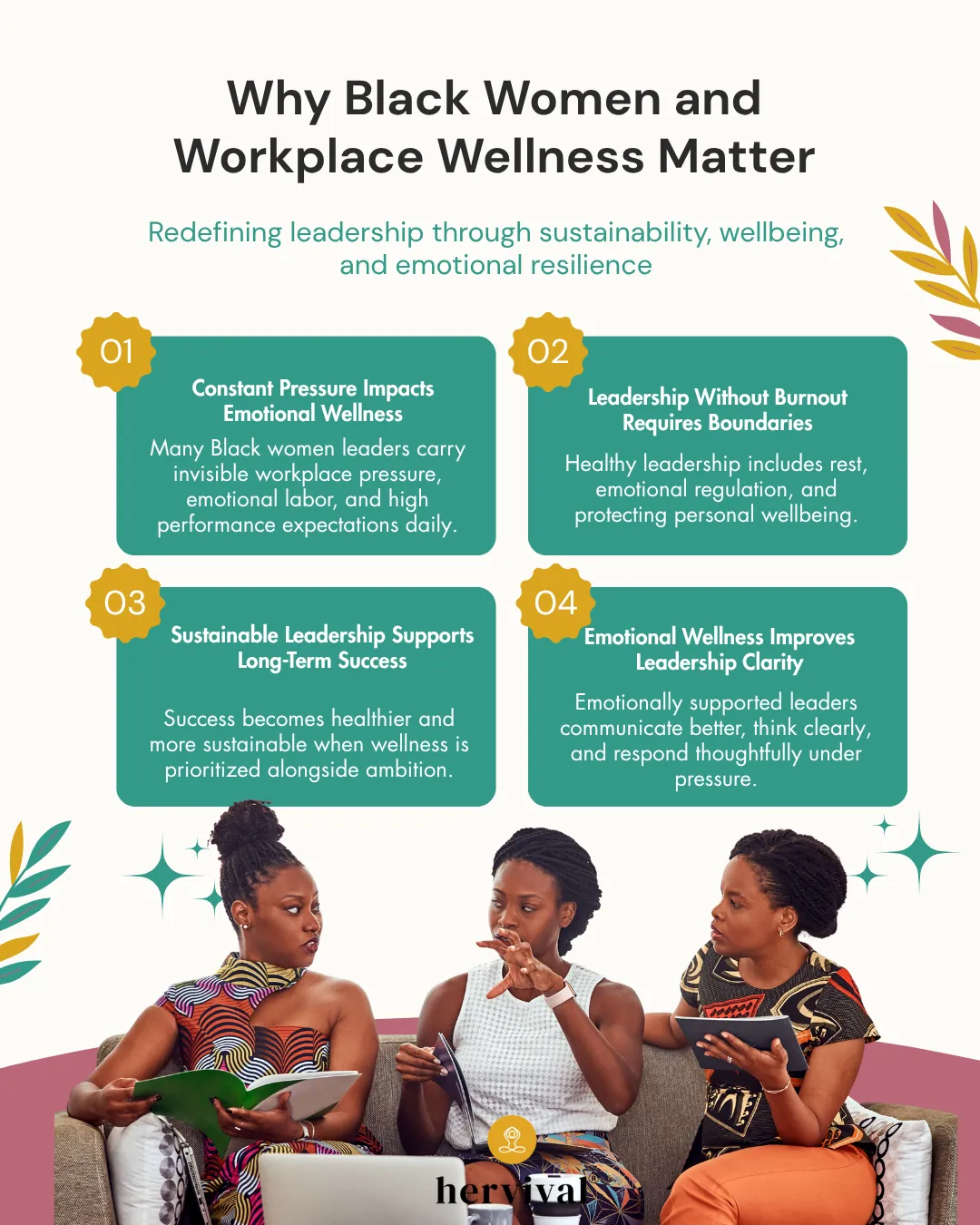
The conversation around Black women and workplace wellness is not simply about self-care trends. It reflects real health, emotional, and workplace realities.
According to research from the American Psychological Association, chronic workplace stress contributes to:
anxiety
sleep disruption
hypertension
emotional exhaustion
long-term chronic disease risk
For many Black women leaders, workplace stress can also include:
code-switching
underrepresentation
performance pressure
emotional isolation in leadership spaces
These experiences affect not only professional performance, but also:
relationships
sleep quality
eating habits
emotional regulation
long-term wellbeing
This connects closely with Leadership and Stress Hormones: Why Regulated Minds Lead Better, where emotional regulation and nervous system health directly influence leadership presence.
Leadership Without Burnout Requires a Different Definition of Strength
For years, burnout was normalized as part of ambition.
But sustainable leadership for women requires a healthier model.
True leadership strength is not:
constant overworking
emotional suppression
endless availability
Instead, it includes:
emotional awareness
healthy boundaries
recovery routines
supportive environments
regulated stress responses
This is especially important for Black women navigating high-pressure professional spaces where the expectation to remain “strong” can quietly become emotionally exhausting.
Many women are now redefining strength through:
rest without guilt
wellness-centered leadership
saying no without apology
protecting mental health
building careers that do not require self-abandonment
That shift is not a weakness.
It is wisdom.
Emotional Wellness in Leadership Impacts Everyday Performance
One of the most overlooked aspects of emotional wellness in leadership is how emotional strain quietly affects decision-making, communication, and confidence.
When stress remains unmanaged over time, leaders may experience:
irritability during conversations
difficulty concentrating
emotional exhaustion
reactive communication
reduced creativity and clarity
On the other hand, emotionally supported leaders often:
communicate more calmly
make clearer decisions
build healthier workplace relationships
sustain energy more consistently
This reflects the deeper insights explored in Emotional Regulation Tools for High-Pressure Leaders, where nervous system support becomes essential for sustainable leadership.
Practical Ways Black Women Are Redefining Workplace Wellness
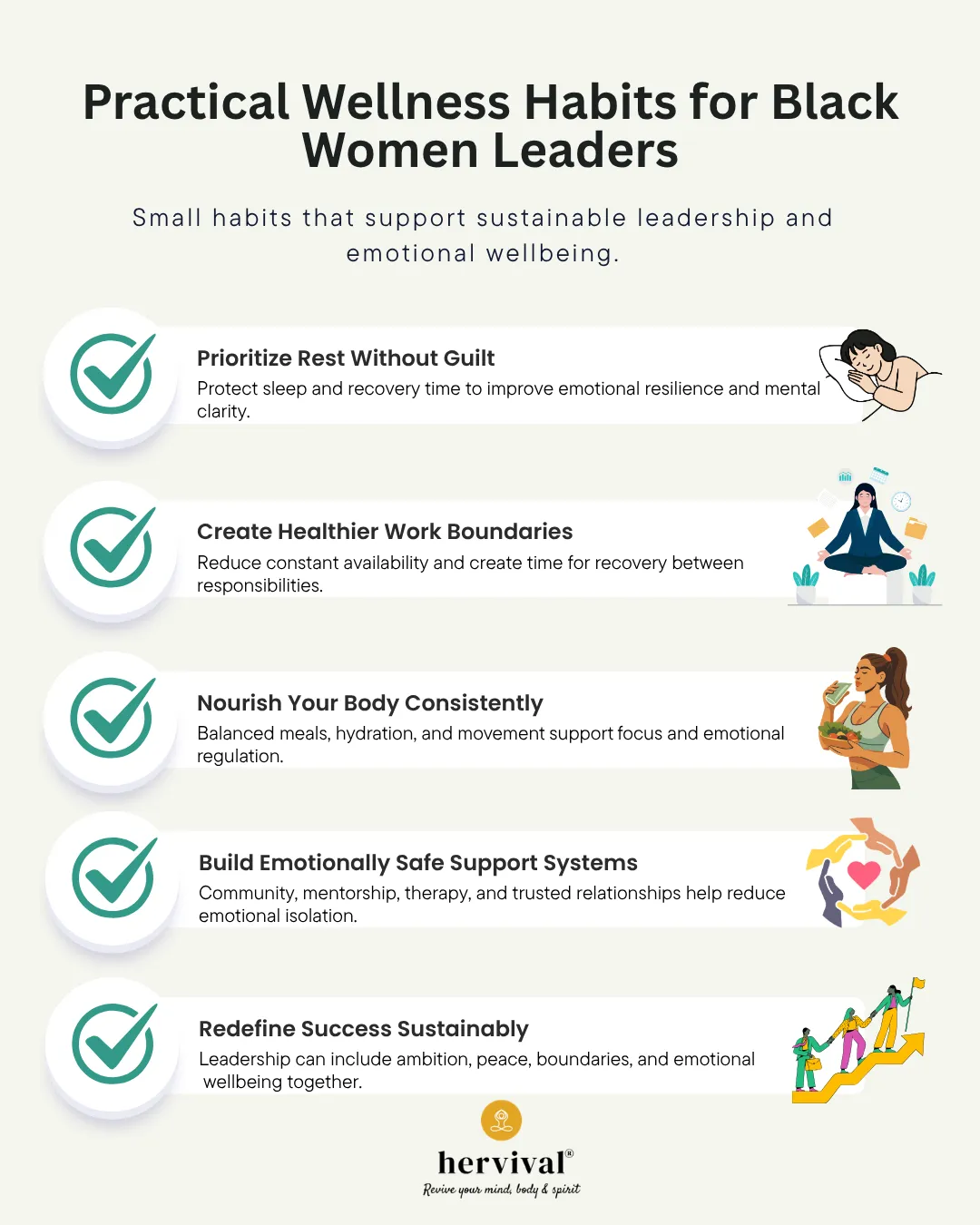
One of the most powerful shifts happening today is the integration of practical, everyday wellness.
Rather than waiting for burnout to force change, many women are proactively creating healthier leadership rhythms.
Here are some realistic ways this looks in everyday life:
1. Prioritizing Rest as Productivity Support for Black Women and Workplace Wellness
Rest is no longer viewed as laziness.
It is increasingly recognized as:
mental recovery
cognitive restoration
emotional regulation support
This aligns naturally with Rest and Recovery in Women’s Leadership, where sleep and restoration directly influence resilience and performance.
2. Creating Boundaries Around Availability
Not every email needs an immediate response.
Not every responsibility belongs to one person.
Healthy boundaries help reduce:
emotional overwhelm
chronic stress
mental fatigue
3. Supporting the Body Through Nutrition and Movement
Leadership wellbeing is physical as much as emotional.
Simple habits like:
balanced meals
hydration
walking breaks
stretching between meetings
can improve:
energy levels
emotional regulation
mental clarity
This connects beautifully with Women, Nutrition, and Brain Health for Resilient Leadership, where nourishment supports sustainable cognitive performance.
4. Building Emotionally Safe Communities: Black Women and Workplace Wellness
Wellness for Black women leaders also grows through community.
Supportive spaces help reduce:
isolation
emotional masking
leadership fatigue
Whether through mentorship, friendship, therapy, or wellness communities, emotional support matters.
Workplace Wellbeing and Resilience Are Changing Leadership Culture
One of the most hopeful changes happening today is that younger generations are challenging unhealthy workplace norms.
Many Gen Z and millennial professionals are openly prioritizing:
mental health
flexibility
emotional wellbeing
sustainable work culture
This shift is helping organizations rethink:
burnout culture
unrealistic productivity expectations
toxic leadership styles
And honestly, that change is necessary.
Because leadership should not require people to lose themselves in order to succeed.
A More Sustainable Future for Leadership
At its core, Black women and workplace wellness represent something much bigger than personal wellness habits.
It represents a broader redefinition of leadership itself.
A future where:
Ambition and rest coexist
Resilience includes recovery
Leadership includes humanity
Well-being is not sacrificed for achievement
And perhaps most importantly:
a future where success no longer depends on surviving exhaustion.
For generations, many Black women have led while carrying extraordinary emotional, professional, and social responsibilities.
But leadership is evolving.
Today, more women are choosing:
wellness without guilt
boundaries without apology
ambition without burnout
And in doing so, they are creating healthier definitions of leadership for future generations.
Because sustainable success should not cost your peace.
Stay Connected With Hervival
If this reflection resonated with you, subscribe to the Hervival Newsletter for thoughtful wellness insights, leadership support, tools for emotional resilience, and sustainable habits designed for modern women navigating work and life with intention.
At Hervival, leadership should support your wellbeing, not slowly erode it.
Research & References
American Psychological Association. (2023). Work in America Survey.
World Health Organization. (2022). Mental Health at Work.
McKinsey & Company & Lean In. (2023). Women in the Workplace Report.
Davidson, R. J., & McEwen, B. S. (2012). Social influences on neuroplasticity and wellbeing. Nature Neuroscience.

Become a part of Our Holistic Wellness & Self-Care Community! Join our membership TODAY!

Try all premium features for 7 days. Cancel anytime, or continue with your selected plan.
© 2021-2025 Hervival® is a trademark under Global Thrive Enterprise LLC . ©2025 Hervival. All Rights Reserve.