
Rest and Recovery in High-Pressure Women’s Leadership
Rest and recovery in women’s leadership often start with something deceptively simple: permission. Permission to slow down in cultures that reward exhaustion.
The freedom to sleep in environments that celebrate constant availability. Choosing to care for the body and mind without guilt.
During International Women’s Day and Sleep Awareness Week, this conversation becomes especially meaningful. Women across history have carried movements, communities, families, and institutions, often while quietly sacrificing their own restoration.
Yet depletion never builds sustainable leadership. Renewal builds it.
Why Rest and Recovery in Women’s Leadership Matter in High-Pressure Roles
High-pressure leadership demands emotional clarity, decision-making strength, and steady presence. However, neglecting rest and recovery leads to chronic sleep deprivation and prolonged stress, which directly weaken these essential abilities.
Neuroscience research shows that insufficient sleep impairs memory, emotional regulation, and judgment, while increasing stress reactivity. Over time, this creates a cycle where leaders work harder but think less clearly.
According to the Centers for Disease Control and Prevention, adults who sleep fewer than seven hours per night face higher risks of anxiety, depression, and chronic health conditions, all of which influence leadership performance.
This is why the conversation connects naturally with emotional regulation in leadership for better decisions, where inner stability shapes external leadership wisdom.
Historical and Modern Women Who Modeled Rest with Resilience
People often frame rest as weakness, especially for women they expect to prove strength through endurance. Yet many influential women quietly modelled another path one where well-being supported achievement rather than competing with it.
From scientists who protected thinking time to activists who built rhythms of rest and recovery within movements, their stories remind us that resilience is not constant motion. It is the ability to return.
Women’s leadership history is therefore not only about persistence.
It is also about recovery, community care, and sustainable impact.
Sleep as the Biological Foundation of Emotional Regulation
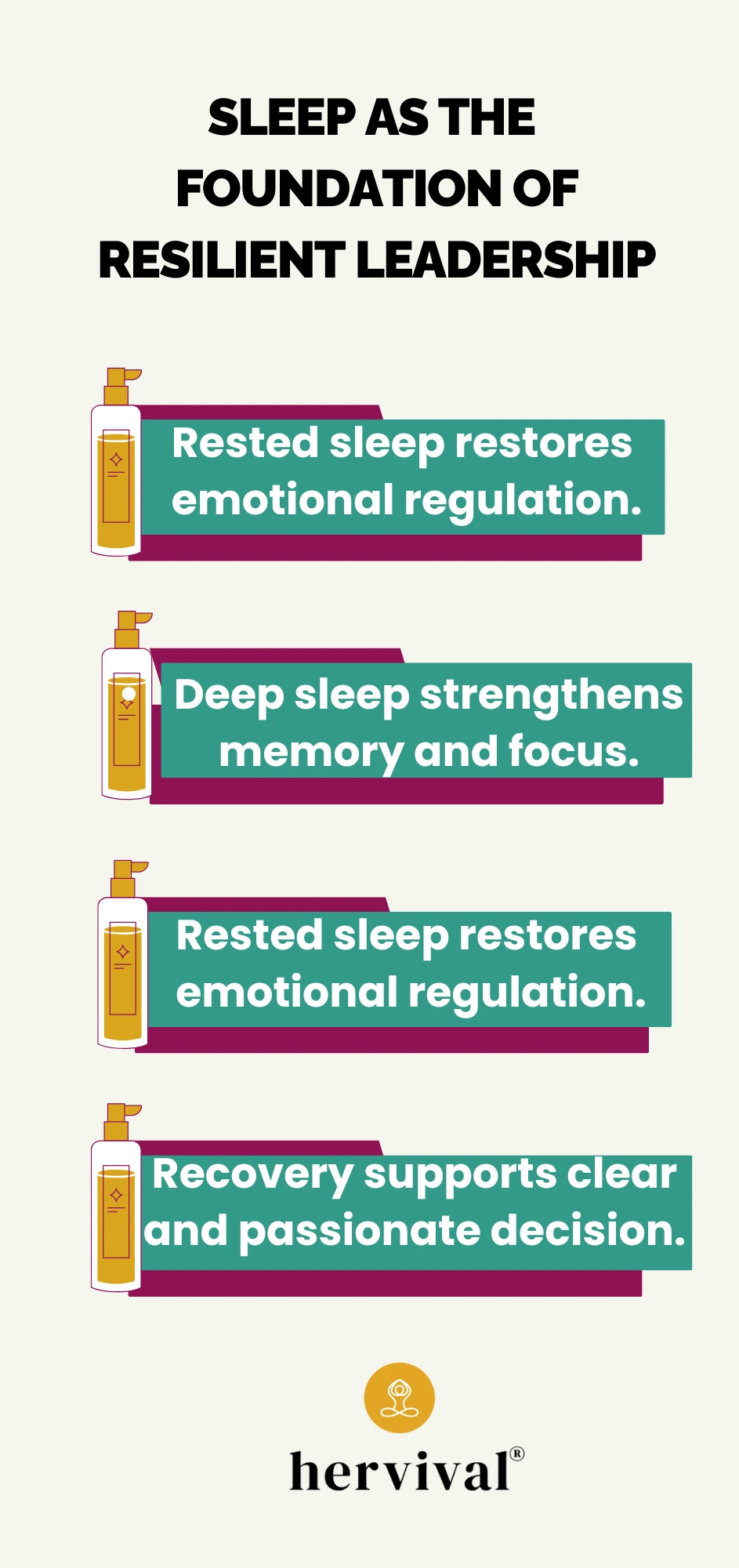
At the centre of rest and recovery in women’s leadership is sleep, the body’s most powerful restoration system.
Quality sleep supports:
Emotional regulation and mood balance
Memory consolidation and learning
Hormonal stability and immune strength
Clear, strategic decision-making
Without sleep, even the most skilled leader operates from depletion. With sleep, the brain regains clarity, patience, and perspective.
Practical Sleep and Recovery Strategies for Women Leaders
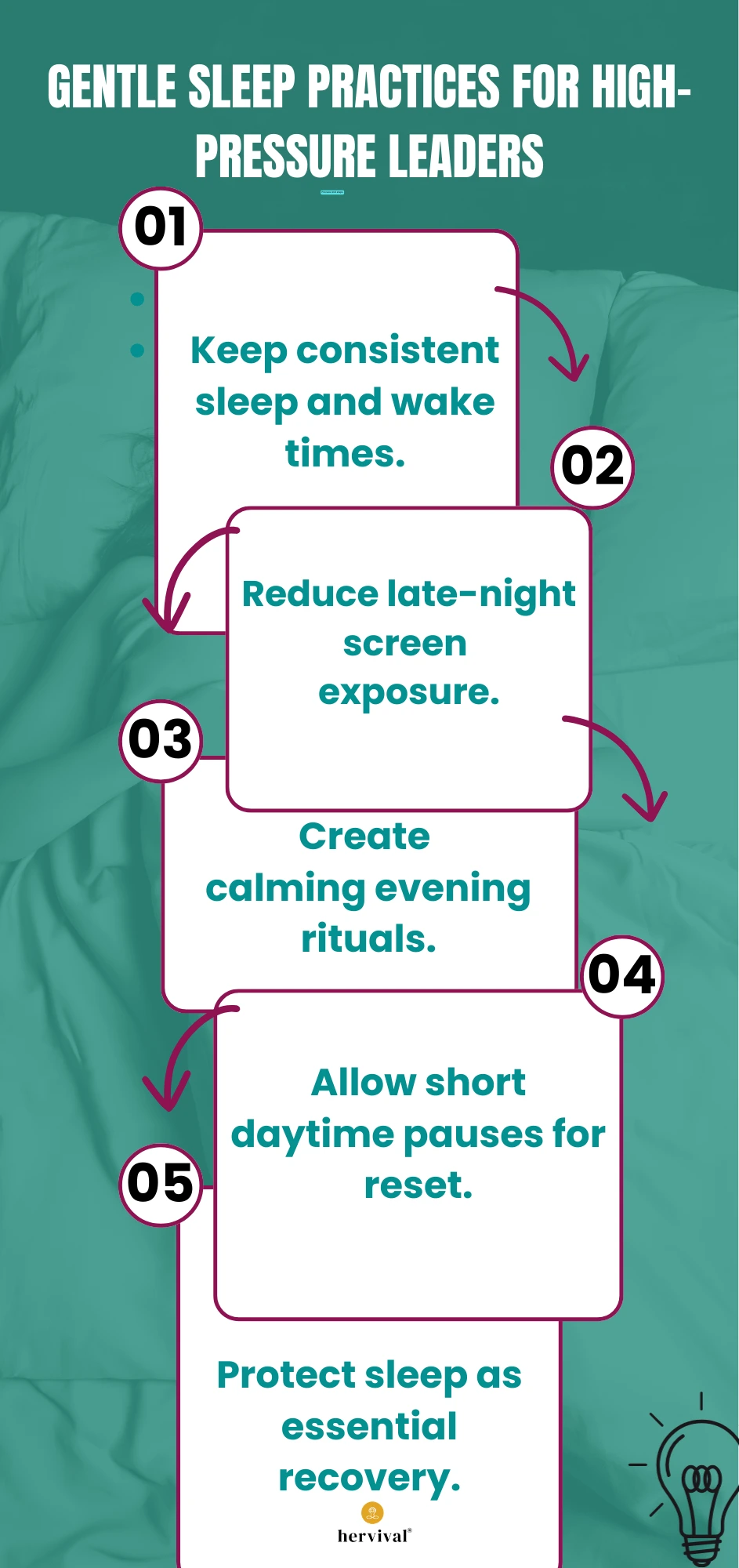
Sustainable Rest and Recovery in Women’s Leadership are built through small, repeatable habits, not dramatic overhauls.
Gentle, research-supported practices include:
Maintaining consistent sleep and wake times
Reducing late-night screen exposure to protect melatonin
Creating calming evening rituals, such as journaling or herbal tea
Allowing short daytime pauses to reset cognitive focus
Protecting boundaries around rest as intentionally as meeting
Rest, Representation, and the Future of Women’s Leadership
When women choose rest alongside representation, leadership culture begins to change.
Teams learn that well-being and excellence can coexist.
Organizations discover that sustainable pace produces deeper impact.
Communities witness leadership that is both powerful and humane.
This broader vision aligns with balanced leadership: work, wellbeing, and purpose, where success is measured not only by outcomes but also by wholeness.
In seasons that celebrate women’s progress and brain health awareness, rest and recovery in women’s leadership offers a quiet but radical truth:
Exhaustion will not sustain the future of leadership.
Sleep, renewal, emotional regulation, and collective care will sustain it.
And when women leaders honor their need for rest, they do more than protect themselves
They redefine leadership for generations to come.
Stay Connected with Hervival
If this reflection resonated, you’re warmly invited to
subscribe to the Hervival Newsletter, a compassionate space for: leadership wellness, emotional clarity, sustainable personal and professional growth


