


Blog

Welcome to Hervival's 'Her Well-Being Haven' Blog— your go-to space for women's health, holistic wellness, self-care, and mental well-being. Join us every Monday & Wednesday for Monday Mantras offering seven soulful mantra affirmations to inspire you each day of the week and Wellness Wednesday brings insightful health-focused blog articles every week. Fuel your journey with impactful insights and embrace a balanced, thriving life!

Personal Mantras for Leaders: Staying Grounded in Uncertain Times
Personal mantras for leaders are more than inspiring words; they are powerful mental anchors that help you stay calm, focused, and intentional when leadership becomes challenging. In moments of uncertainty, difficult decisions, or self-doubt, the words you repeat to yourself can shape how you think, feel, and lead.
Leadership today is rarely predictable. Priorities shift, unexpected challenges arise, and the pressure to make the right decision can feel constant. While no mantra removes uncertainty, it can help you return to your values rather than react to your fears.
The strongest leaders are not those who never experience pressure. They are often the ones who have healthy practices that help them stay grounded when pressure arrives.
Why Personal Mantras for Leaders Matter
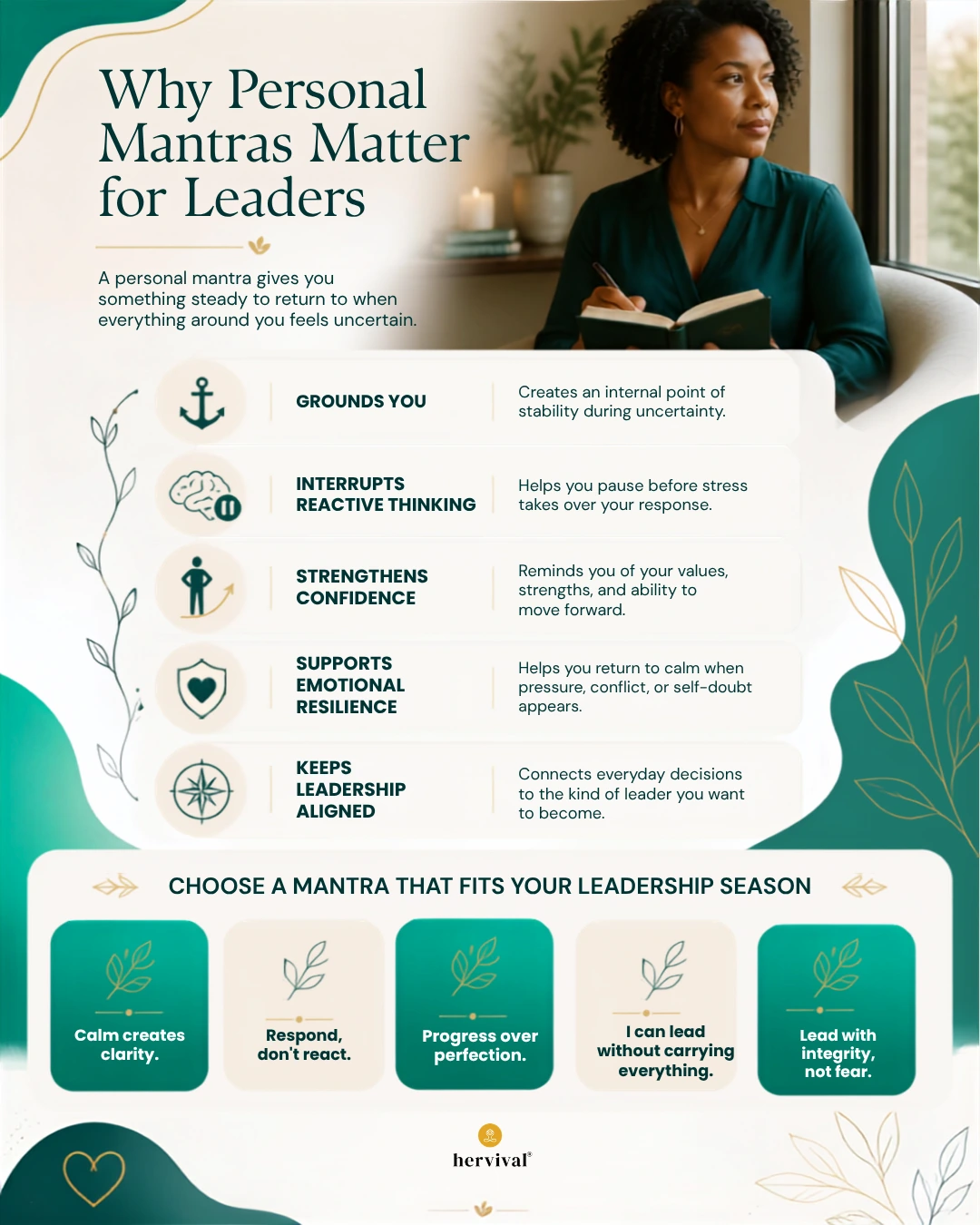
Leadership is as much an internal journey as it is an external one.
Every day, leaders hold silent conversations with themselves.
"Can I handle this?"
"What if I make the wrong decision?"
"Am I doing enough?"
These internal thoughts influence confidence, communication, and decision-making long before anyone else notices.
A personal mantra helps interrupt unhelpful thinking by replacing it with intentional, value-driven language.
Instead of becoming overwhelmed by uncertainty, leaders learn to pause, breathe, and reconnect with what matters most.
This simple practice strengthens both emotional wellbeing and leadership presence.
The Connection Between Leadership Mindset and Daily Self-Talk
Your leadership mindset is shaped not only by experience but also by the stories you repeatedly tell yourself.
Research in psychology suggests that repeated patterns of self-talk influence emotional regulation, confidence, and resilience. While positive thinking alone cannot solve every challenge, constructive internal dialogue can help leaders approach situations with greater clarity and composure.
A healthy mindset sounds different.
Instead of:
"Everything depends on me."
A grounded leader might think:
"I can lead this moment one decision at a time."
Instead of:
"I have to be perfect."
They remind themselves:
"Progress creates impact."
These small shifts help create a calmer, more balanced perspective.
Emotional Resilience for Leaders Begins Within
Strong emotional resilience for leaders is built through consistent inner practices rather than extraordinary moments.
A personal mantra becomes especially valuable during:
Difficult conversations
High-pressure meetings
Unexpected setbacks
Organisational change
Personal self-doubt
Conflict resolution
Repeating a meaningful phrase helps calm the mind and redirect attention toward thoughtful action.
This complements the ideas explored in Leadership and Nervous System Health: Why It Matters More Than Ever, where regulating the body supports calmer leadership responses.
Together, nervous system regulation and intentional self-talk create a powerful foundation for resilient leadership.
Leadership Self-Awareness Creates Better Decisions
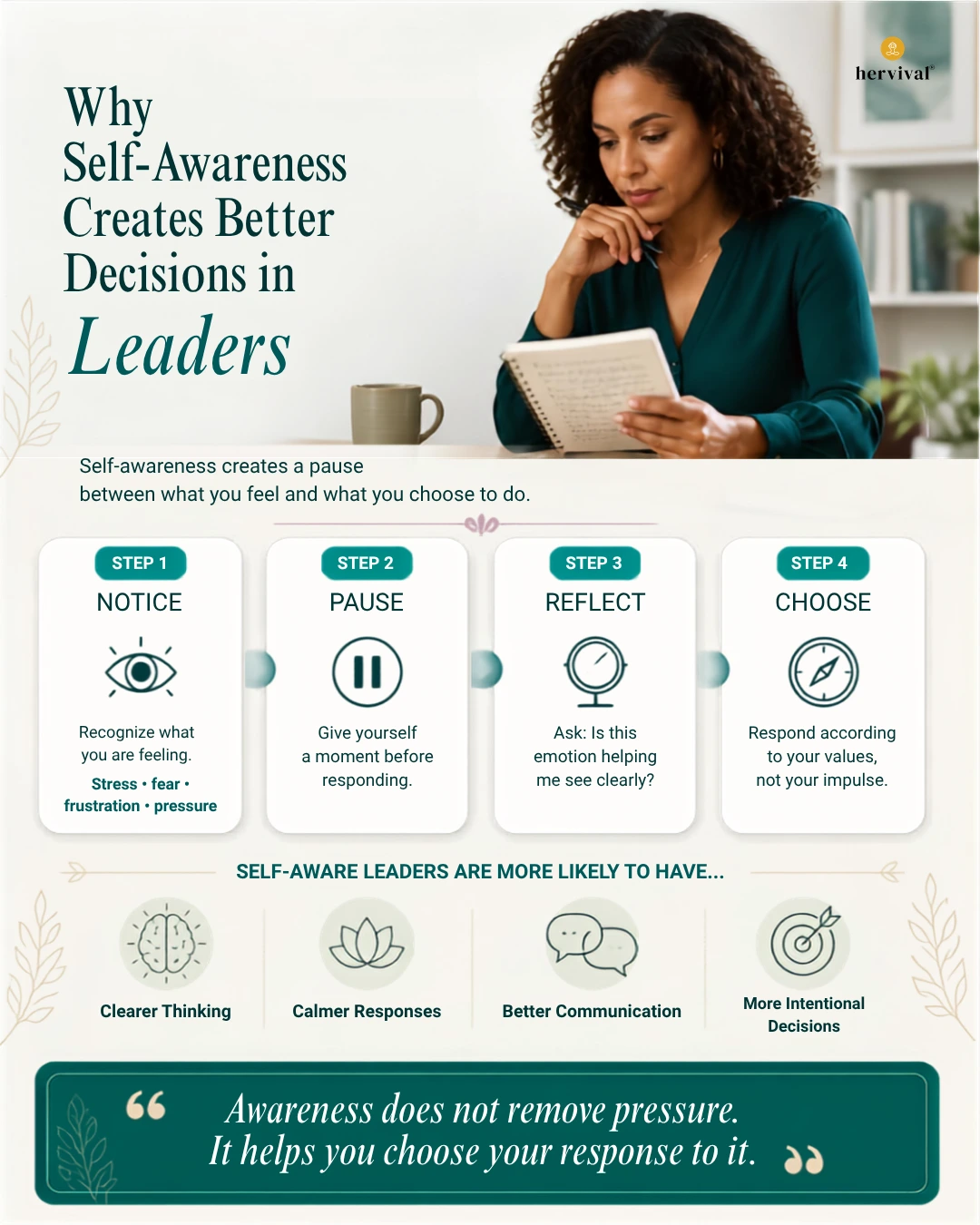
Before leaders can influence others, they must understand themselves.
Leadership self-awareness allows you to notice when stress, frustration, or fear are beginning to influence your decisions.
A personal mantra creates a brief pause between emotion and action.
That pause often makes the difference between reacting impulsively and responding intentionally.
Ask yourself:
What am I feeling right now?
What values do I want this decision to reflect?
Which thought will help me lead wisely?
These simple questions strengthen both emotional regulation and leadership confidence.
Our article The Regulated Leader: How Calm Leadership Improves Decision-Making explores how intentional pauses improve judgment during stressful situations.
Examples of Personal Mantras That Support Leadership
The best mantras are simple, memorable, and personally meaningful.
Here are a few examples:
For Calm Leadership
"Calm creates clarity."
For Confidence
"I can handle one step at a time."
For Growth
"Progress over perfection."
For Difficult Conversations
"Respond, don't react."
For Uncertainty
"I don't need all the answers today."
For Self-Compassion
"Rest strengthens my leadership."
For Purpose
"Lead with integrity, not fear."
The goal is not to repeat words mechanically.
The goal is to choose words that gently guide your attention back to your values.
Mindful Leadership Practices Make Mantras More Powerful
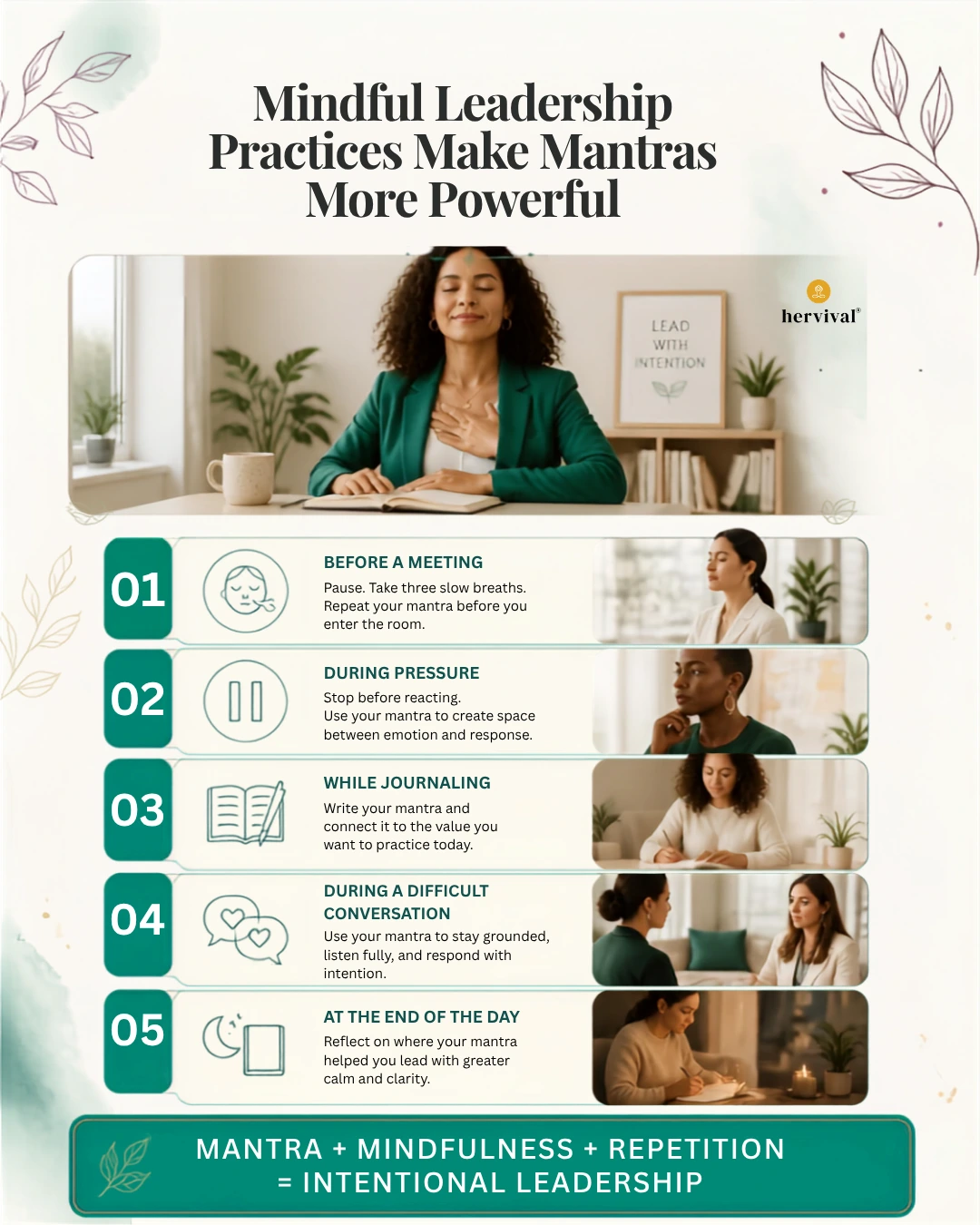
Personal mantras become even more effective when paired with mindful leadership practices.
Consider incorporating them into your daily routine.
Before Your First Meeting
Take three slow breaths and repeat your chosen mantra.
During Difficult Conversations
Silently repeat your mantra before responding.
After Challenging Moments
Reflect on what you learned rather than focusing only on what went wrong.
During Your Morning Routine
Write your mantra in a journal or place it where you will see it throughout the day.
Small daily repetitions gradually strengthen emotional resilience.
Leadership Confidence Grows Through Consistency
Many people believe confidence comes before action.
Often, the opposite is true.
Leadership confidence grows through repeated experiences of acting in alignment with your values.
Personal mantras help reinforce those values during moments of uncertainty.
Rather than seeking perfection, confident leaders focus on consistency.
They trust themselves to learn, adapt, and continue growing.
This philosophy echoes Leadership Beyond Heroics: Building Human-Centered Leaders, where authenticity and humanity replace unrealistic expectations of perfection.
Self-Leadership Habits That Keep You Grounded
A personal mantra works best when supported by healthy daily routines.
Consider pairing your mantra with these self-leadership habits:
Begin each day with intentional reflection.
Protect your sleep and recovery.
Take regular movement breaks.
Practice gratitude.
Limit unnecessary digital distractions.
Spend time in nature.
Celebrate small wins.
Check in with your emotional state before important decisions.
Personal Growth for Leaders Is Built One Thought at a Time
Leadership development is often associated with learning new skills.
Equally important is learning new ways of thinking.
Every encouraging thought, intentional pause, and meaningful mantra contributes to leaders' personal growth.
Over time, these small inner practices influence how leaders communicate, build trust, navigate uncertainty, and support others.
Growth begins inside long before it becomes visible on the outside.
Reflection
Leadership will always include moments of uncertainty.
There will be decisions without perfect answers, challenges without immediate solutions, and seasons that test your confidence.
In those moments, your greatest source of stability may not be another strategy.
It may be the words you choose to return to.
Personal Mantras for Leaders remind us that calm leadership begins with intentional self-leadership.
The conversations we have with ourselves shape the conversations we have with others.
And when our inner voice reflects clarity, compassion, and purpose, our leadership naturally follows.
Stay Connected With Hervival
If this reflection resonated with you, subscribe to the Hervival Newsletter for practical leadership insights, emotional wellbeing strategies, and science-backed wellness resources designed to help you lead with confidence, resilience, and purpose.
Each edition shares thoughtful tools to strengthen your mindset, protect your wellbeing, and support sustainable leadership, because the way you lead yourself shapes the way you lead others.
Research & References
Bandura, A. (1997). Self-Efficacy: The Exercise of Control.
Dweck, C. S. (2006). Mindset: The New Psychology of Success.
Davidson, R. J., & McEwen, B. S. (2012). Social Influences on Neuroplasticity and Wellbeing. Nature Neuroscience, 15(5), 689–695.
Goleman, D. (1998). Working with Emotional Intelligence.
American Psychological Association. (2023). Work in America Survey.

Become a part of Our Holistic Wellness & Self-Care Community! Join our membership TODAY!

Try all premium features for 7 days. Cancel anytime, or continue with your selected plan.
© 2021-2025 Hervival® is a trademark under Global Thrive Enterprise LLC . ©2025 Hervival. All Rights Reserve.