


Blog

Welcome to Hervival's 'Her Well-Being Haven' Blog— your go-to space for women's health, holistic wellness, self-care, and mental well-being. Join us every Monday & Wednesday for Monday Mantras offering seven soulful mantra affirmations to inspire you each day of the week and Wellness Wednesday brings insightful health-focused blog articles every week. Fuel your journey with impactful insights and embrace a balanced, thriving life!

Women, Nutrition, and Brain Health for Resilient Leadership
Women, nutrition, and brain health are deeply connected to how leaders think, feel, and sustain their impact over time. During Women’s History Month, alongside Nutrition Month and Brain Awareness Week, we are reminded that leadership is not only shaped by vision or strategy, but also by the quiet biological foundations that support clarity, memory, and emotional resilience.
For many women balancing advocacy, careers, caregiving, and community leadership, mental fatigue can feel inevitable. Yet the brain is not fixed. It responds continuously to nourishment, rest, and emotional care. This means resilience is not only inspirational, it is physiological.
Why Women, Nutrition, and Brain Health Matter for Leadership
Women, nutrition, and brain health matter because cognitive performance and emotional stability are essential to sustainable leadership. Neuroscience research shows that nutrient-dense diets support neurotransmitter balance, reduce inflammation, and improve memory and focus, key functions for decision-making and emotional regulation.
Conversely, chronic stress combined with poor nutrition can impair attention, mood regulation, and long-term brain health.
According to the World Health Organization, mental well-being and workplace functioning are closely linked to lifestyle factors such as diet, sleep, and stress management.
This connection echoes the deeper reflection in Emotional Regulation in Leaders, where internal stability strengthens external leadership clarity.
How Nutrition Supports Cognitive Performance and Emotional Resilience
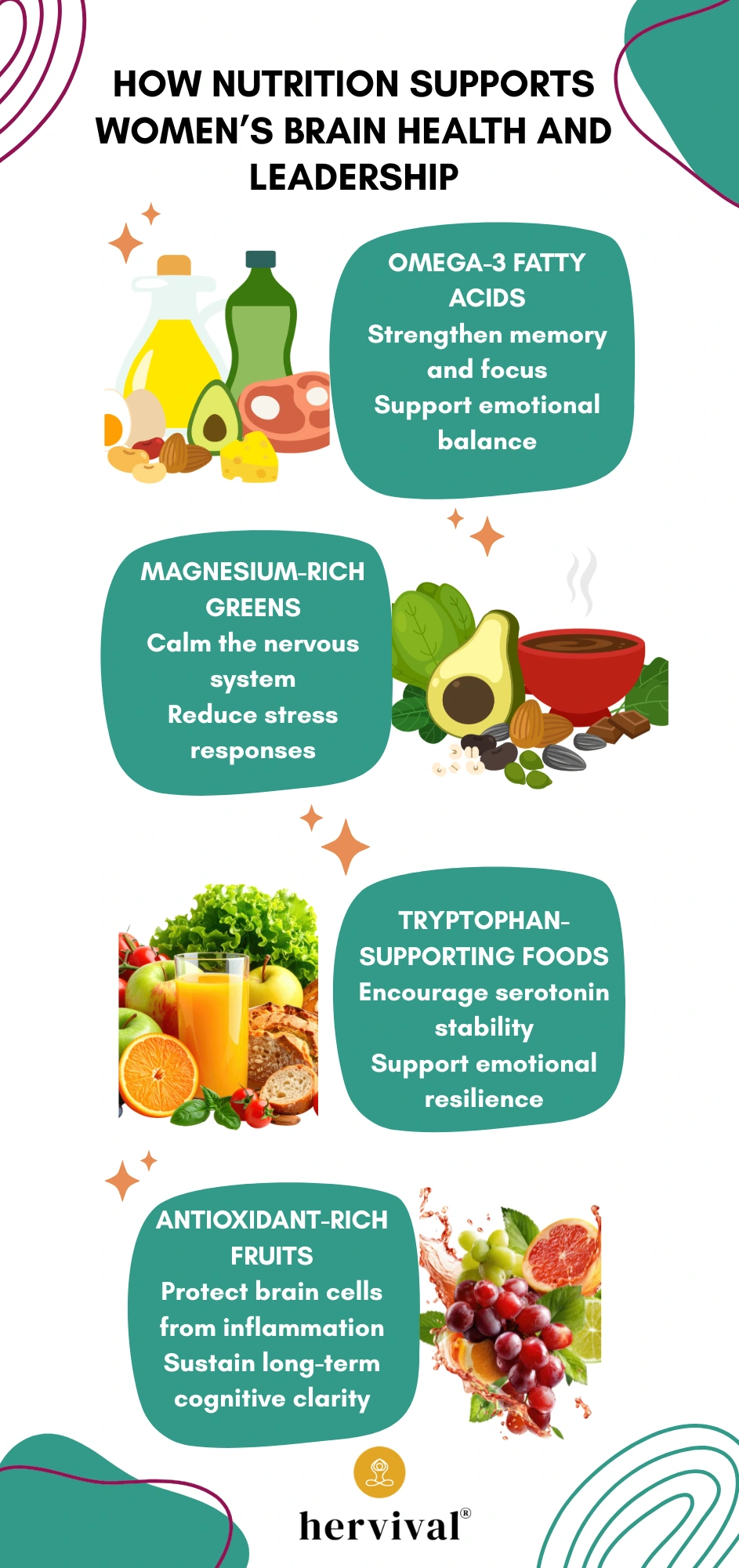
At the centre of women, nutrition, and brain health is the role food plays in supporting the nervous system.
Certain nutrients directly influence mood and cognition:
Omega-3 fatty acids support memory, focus, and emotional balance
Magnesium-rich greens help calm anxiety and regulate stress responses
Tryptophan-containing foods like oats and bananas support serotonin production
Antioxidant-rich berries protect brain cells from inflammation
Equally important is reducing excess caffeine and refined sugar, which can increase anxiety, energy crashes, and emotional reactivity.
These everyday choices quietly shape how leaders think, respond, and recover, aligning with the sustainable rhythms explored in Healthy Leadership Habits.
Honoring Women Who Advanced Brain Health and Nutrition
Reflecting on women, nutrition, and brain health during March also means honoring the women whose scientific and medical contributions transformed how we understand wellbeing.
From neuroscientists researching stress and resilience to nutrition scientists advancing maternal and community health, women have shaped the knowledge that now supports global wellbeing. Their work reminds us that caring for the brain is not separate from leadership; it is part of the legacy of women who built healthier futures.
Women’s history is therefore not only about achievement.
It is also about healing, nourishment, and collective progress.
Women, Nutrition, and Brain Health in Everyday Leadership Life
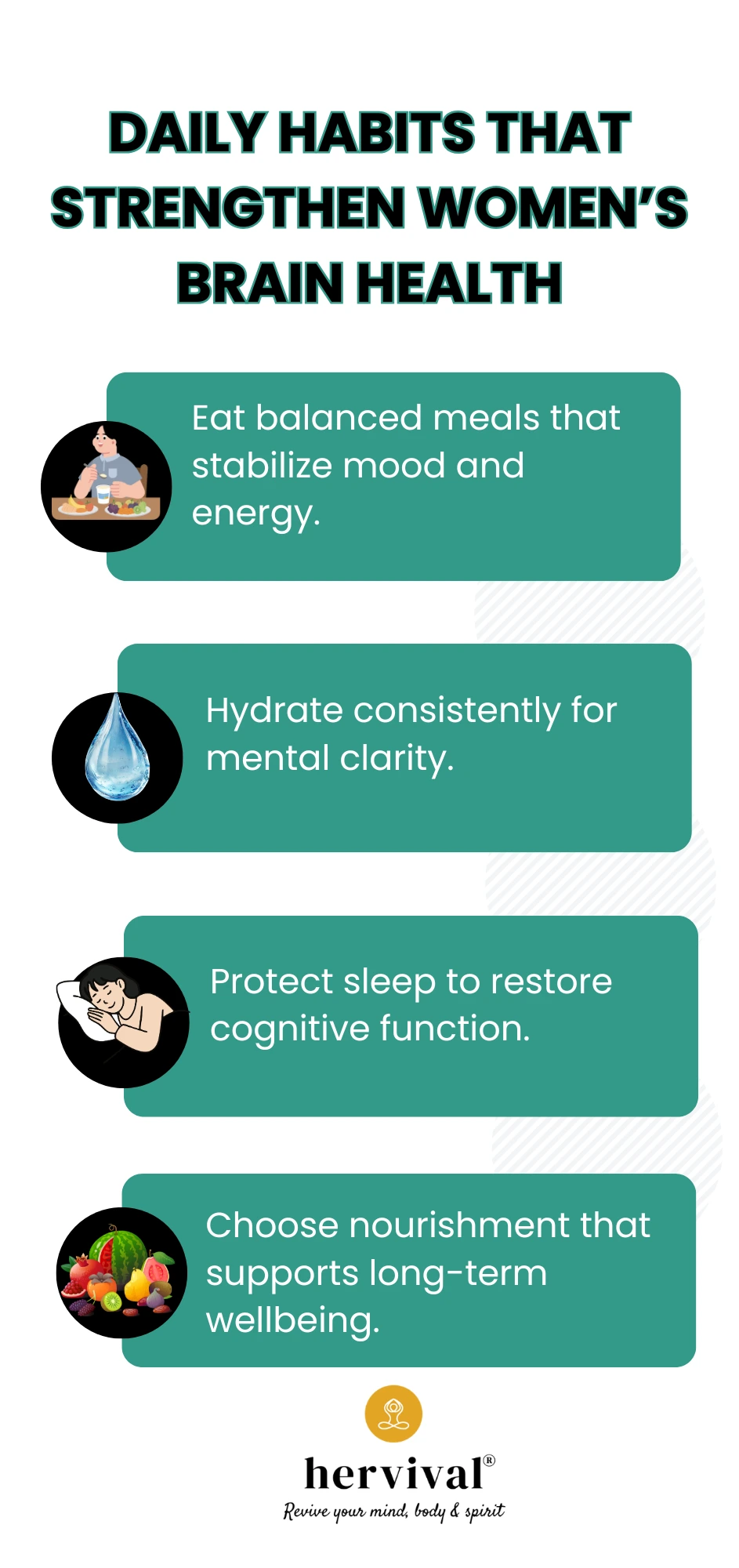
In practical terms, women, nutrition, and brain health show up in small, repeatable habits:
Eating balanced meals that stabilize energy and mood
Hydrating consistently to support cognitive clarity
Creating pauses for rest to protect mental focus
Choosing nourishment that supports long-term wellbeing, not just productivity
A Broader Vision of Resilient Leadership
Ultimately, Women, nutrition, and brain health invite a wider definition of resilience, one rooted not only in perseverance, but in care.
Resilient leadership is not about keeping going without support.
It is the wisdom to nourish the mind, regulate emotions, and protect well-being so leadership can endure.
This same philosophy appears in reminding us that sustainability is built through support, not self-sacrifice.
As Women’s History Month, Nutrition Month, and Brain Awareness Week converge, women, nutrition, and brain health offer a powerful reminder:
The future of leadership is not only visionary.
It is well-nourished, emotionally grounded, and biologically supported.
And when women care for their brains as intentionally as they care for their work, leadership becomes not just impactful but lasting.
Stay Connected With Hervival
If this reflection spoke to you, you’re warmly invited to subscribe to the Hervival Newsletter
a gentle space for leadership wellness, emotional clarity, and sustainable growth.
Each edition brings supportive insights for women who want to lead with strength, nourishment, and resilience without losing themselves along the way.
Join the Hervival community and receive new reflections in your inbox.
Research & References
Gómez-Pinilla, F. (2008). Brain foods: The effects of nutrients on brain function. Nature Reviews Neuroscience, 9(7), 568–578.
World Health Organization. (2022). Mental health at work.
Davidson, R. J., & McEwen, B. S. (2012). Social influences on neuroplasticity and wellbeing. Nature Neuroscience, 15(5), 689–695.

Become a part of Our Holistic Wellness & Self-Care Community! Join our membership TODAY!

Try all premium features for 7 days. Cancel anytime, or continue with your selected plan.
© 2021-2025 Hervival® is a trademark under Global Thrive Enterprise LLC . ©2025 Hervival. All Rights Reserve.