


Blog

Welcome to Hervival's 'Her Well-Being Haven' Blog— your go-to space for women's health, holistic wellness, self-care, and mental well-being. Join us every Monday & Wednesday for Monday Mantras offering seven soulful mantra affirmations to inspire you each day of the week and Wellness Wednesday brings insightful health-focused blog articles every week. Fuel your journey with impactful insights and embrace a balanced, thriving life!

Black Freedom and Wellbeing: Reclaiming Rest and Joy
Black freedom and wellbeing are deeply connected to the ability to rest, heal, experience joy, and live beyond constant survival.
As Juneteenth reminds us of liberation, history, and resilience, it also creates space for an important conversation:
What does freedom truly look like for Black women today?
For many women, leadership has often been shaped by endurance:
carrying responsibilities silently
navigating workplace pressure
supporting families and communities
succeeding despite emotional exhaustion
Black women have historically led movements, nurtured communities, built businesses, and created change while carrying extraordinary emotional weight.
But survival alone was never meant to be the final destination.
Today, more Black women are redefining success through wellness, emotional healing, boundaries, joy, and sustainable leadership.
And honestly, that shift matters.
Why Black Freedom and Wellbeing Matter Today
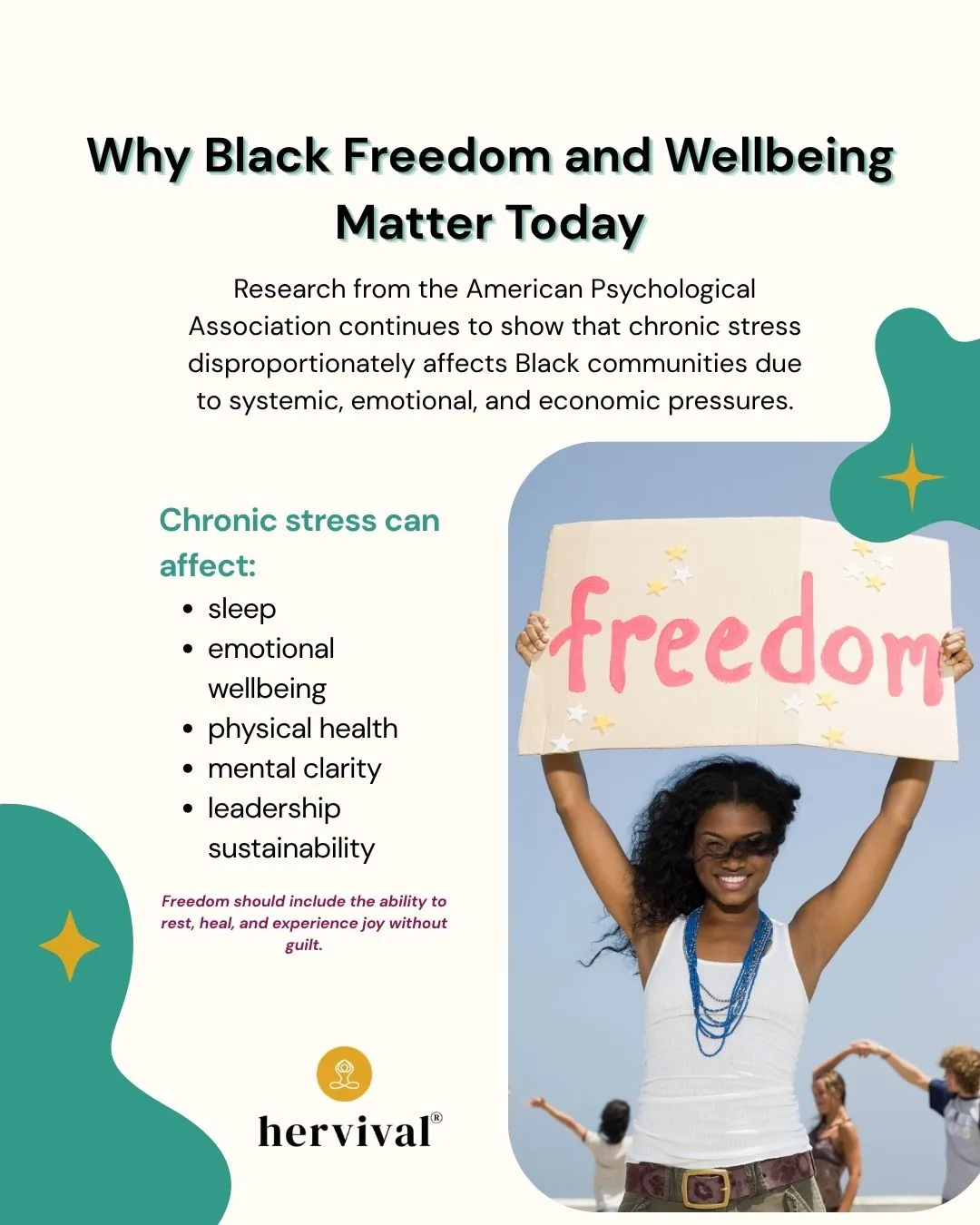
The conversation around Black freedom and wellbeing goes beyond physical health.
It includes:
emotional wellbeing
mental health
nervous system healing
rest and recovery
freedom from burnout
the ability to experience joy without guilt
Research from the American Psychological Association continues to show that chronic stress disproportionately affects Black communities due to ongoing systemic, emotional, and economic pressures.
For many Black women, this stress can quietly show up through:
sleep difficulties
emotional exhaustion
anxiety
burnout
chronic health conditions
feeling emotionally “on” all the time
That is why wellness as liberation matters.
Healing is not selfish.
Rest is not laziness.
Joy is not avoidance.
These are necessary parts of sustainable wellbeing for Black women.
Rest as Resistance and Emotional Recovery
One of the most powerful ideas emerging today is the concept of rest as resistance.
For generations, Black women were often expected to:
overperform
overgive
remain emotionally strong
continue pushing regardless of exhaustion
Many people still unconsciously associate worth with constant productivity.
But reclaiming rest and joy challenges that narrative.
Rest allows the nervous system to recover from chronic stress.
It improves:
emotional regulation
mental clarity
decision-making
physical wellbeing
leadership sustainability
This reflects the deeper ideas explored in Rest and Recovery in Women’s Leadership, where rest becomes essential for healthy leadership rather than something earned after burnout.
Healing Generational Stress and Emotional Exhaustion
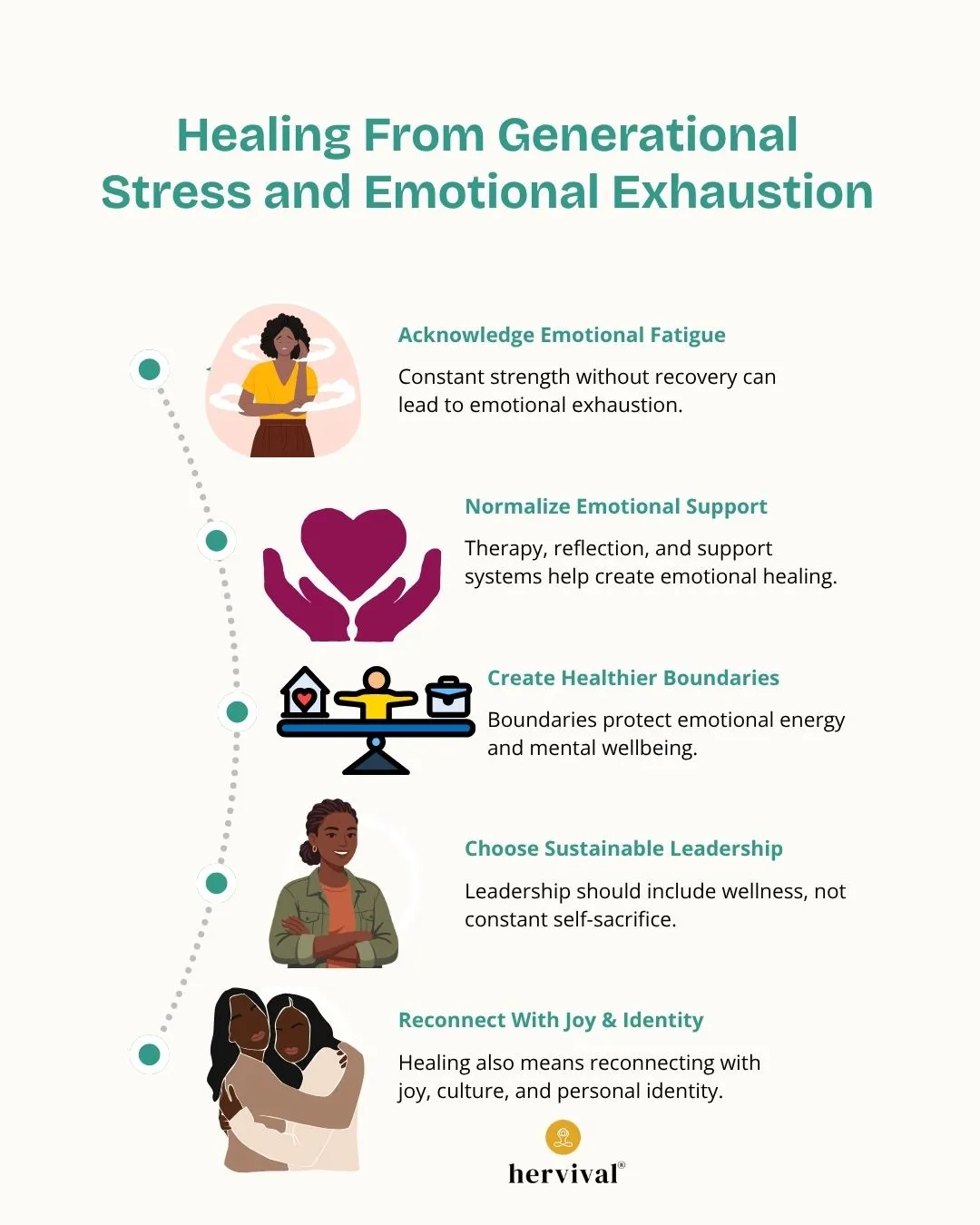
Another important part of leadership and healing involves acknowledging generational stress.
Many Black women inherited survival patterns from generations who had limited opportunities to prioritize emotional well-being openly.
Older generations often survived by:
suppressing emotions
pushing through hardship
carrying emotional pain privately
prioritizing survival over recovery
While that resilience deserves deep respect, younger generations are beginning to ask:
Can healing also be part of leadership?
That question is transforming conversations around mental health and emotional wellness in leadership spaces.
Today, more women are embracing:
therapy
emotional regulation
nervous system care
healthier work boundaries
intentional rest practices
This reflects the ongoing shift explored in Black Women and Workplace Wellness: Redefining Leadership, where leadership becomes healthier when emotional well-being is included in the definition of success.
Black Joy Is Part of Emotional Wellness
Too often, conversations about Black wellness focus only on struggle.
But joy matters too.
Black joy and mental well-being are deeply connected because joy helps create:
emotional release
nervous system safety
hope
creativity
connection
Music, dance, laughter, storytelling, celebration, and community gatherings are not distractions from healing.
They are part of healing.
Moments of joy help interrupt chronic stress patterns and remind people that wellness also includes pleasure, peace, and emotional freedom.
Building Wellness-Centered Communities
Collective care has always been part of Black resilience.
Across generations, communities have supported one another through:
faith communities
mentorship
family systems
neighborhood care
shared wisdom
activism and advocacy
Today, building wellness-centered communities means creating spaces where people feel emotionally safe enough to:
rest
ask for help
set boundaries
heal openly
prioritize wellbeing without shame
This also aligns with the conversations in Soulful Leadership: Why Inner Alignment Matters Today, where leadership begins with internal wellness rather than external performance alone.
How Black Women Are Redefining Leadership
Modern leadership is shifting.
More Black women are choosing leadership styles rooted in:
emotional intelligence
authenticity
balance
wellness
self-preservation
community impact
Success is no longer measured only by productivity or sacrifice.
Instead, sustainable leadership increasingly asks:
Can you lead without losing yourself?
Can success coexist with peace?
Can ambition exist alongside emotional well-being?
That redefinition is powerful.
Because leadership should not require abandoning humanity.
Practical Ways to Reclaim Rest and Joy
Reclaiming wellness does not always require dramatic life changes.
Sometimes healing begins with small intentional choices.
Practical wellness practices include:
protecting sleep and recovery time
reducing constant digital overwhelm
creating joyful daily rituals
seeking therapy or emotional support
reconnecting with community
practicing mindfulness and reflection
celebrating progress without guilt
allowing space for rest without “earning” it first
Small moments of restoration can create profound emotional shifts over time.
Reflection on This
At its core, Black freedom and wellbeing are about more than surviving pressure.
They are about creating lives where Black women can:
rest fully
heal honestly
lead sustainably
experience joy freely
preserve emotional well-being without apology
Juneteenth reminds us that liberation is ongoing.
One of the most powerful forms of freedom today is the freedom to care for ourselves as intentionally as we care for everyone else.
Let's Connect Further
If this reflection resonated with you, subscribe to the Hervival Newsletter for thoughtful wellness insights, emotional resilience tools, leadership reflections, and sustainable wellbeing resources designed for women navigating life, work, healing, and growth.
At Hervival, wellness should support your humanity, not compete with it.
Research & References
American Psychological Association. (2023). Stress in America Report.
World Health Organization. (2022). Mental Health at Work.
National Institutes of Health. (2023). Chronic Stress and Health Disparities Research.
Walker, R. L. (2021). Rest as Resistance and Collective Healing in Black Communities.

Become a part of Our Holistic Wellness & Self-Care Community! Join our membership TODAY!

Try all premium features for 7 days. Cancel anytime, or continue with your selected plan.
© 2021-2025 Hervival® is a trademark under Global Thrive Enterprise LLC . ©2025 Hervival. All Rights Reserve.