


Blog

Welcome to Hervival's 'Her Well-Being Haven' Blog— your go-to space for women's health, holistic wellness, self-care, and mental well-being. Join us every Monday & Wednesday for Monday Mantras offering seven soulful mantra affirmations to inspire you each day of the week and Wellness Wednesday brings insightful health-focused blog articles every week. Fuel your journey with impactful insights and embrace a balanced, thriving life!
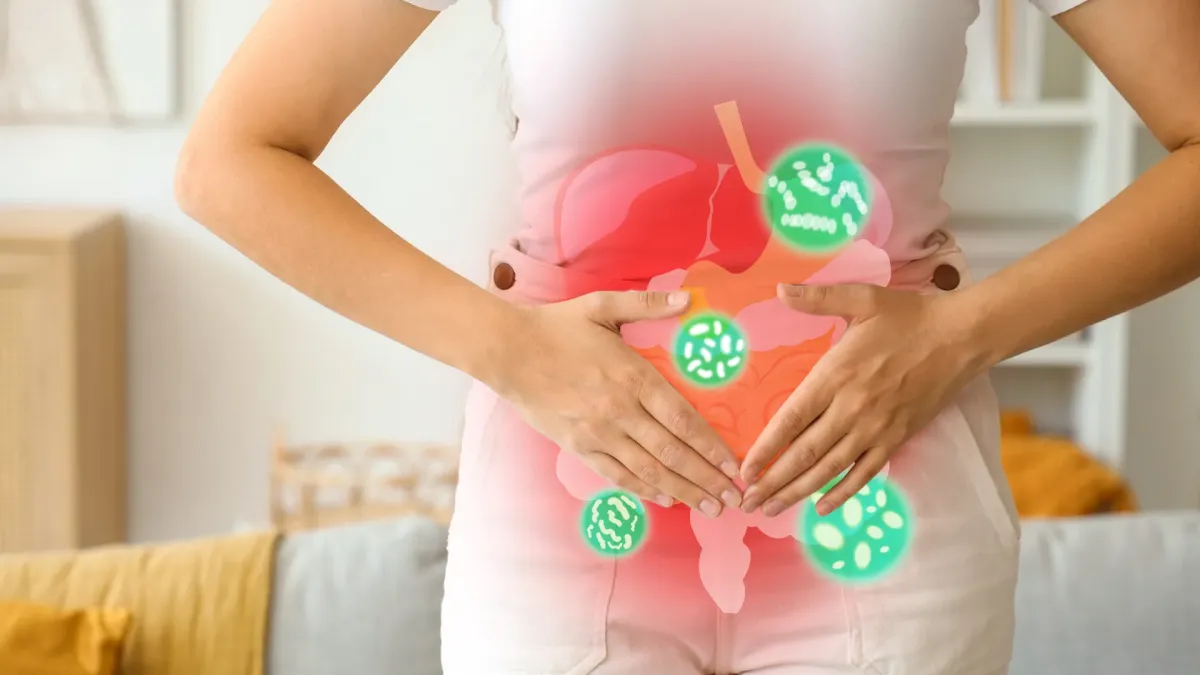
Gut Health for High-Performers: Daily Habits for Better Energy
Gut health for high performers is not just about digestion; it’s about how you think, feel, and sustain your energy throughout the day.
For many founders, professionals, and team leaders, the day moves fast:
Meetings stack back-to-back
Meals are rushed or skipped
Coffee replaces real nourishment
And while this pace may feel productive, it often comes with hidden costs:
Energy crashes
Brain fog
Irritability
Reduced focus
What many don’t realize is that these experiences are often connected to the gut-brain axis, the direct link between your digestive system and your mental performance.
Why Gut Health Matters for Energy and Focus
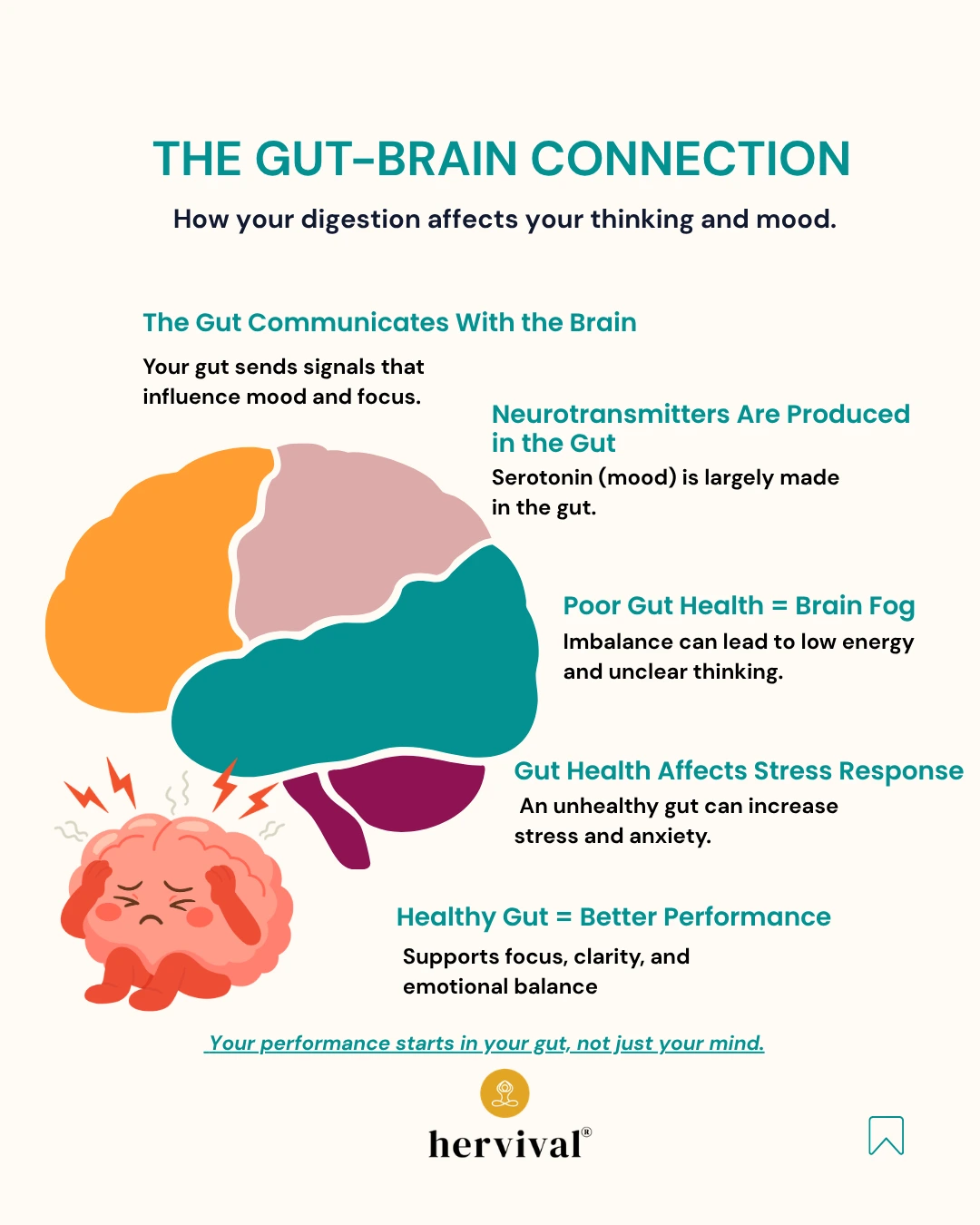
The gut is often called the “second brain” for a reason.
It plays a key role in:
Producing neurotransmitters like serotonin (which affects mood)
Regulating inflammation (which impacts mental clarity)
Supporting nutrient absorption (which fuels energy)
When your gut is supported, you may notice:
More stable energy levels
Improved concentration
Better emotional balance
But when gut health is neglected:
Blood sugar spikes and crashes increase
Mental fatigue becomes more frequent
Stress responses intensify
Research published in Nature Reviews Gastroenterology & Hepatology highlights how the gut microbiome directly influences cognitive function and emotional regulation.
Common Gut Health Challenges for Busy Professionals
Gut health among high performers is often disrupted by modern work habits.
Some of the most common challenges include:
Eating too quickly or while distracted
Over-reliance on caffeine
Irregular meal timing
Low intake of fiber and whole foods
Dehydration throughout the day
These patterns don’t just affect digestion; they affect how you perform.
3 Simple Gut Health Habits You Can Start Today
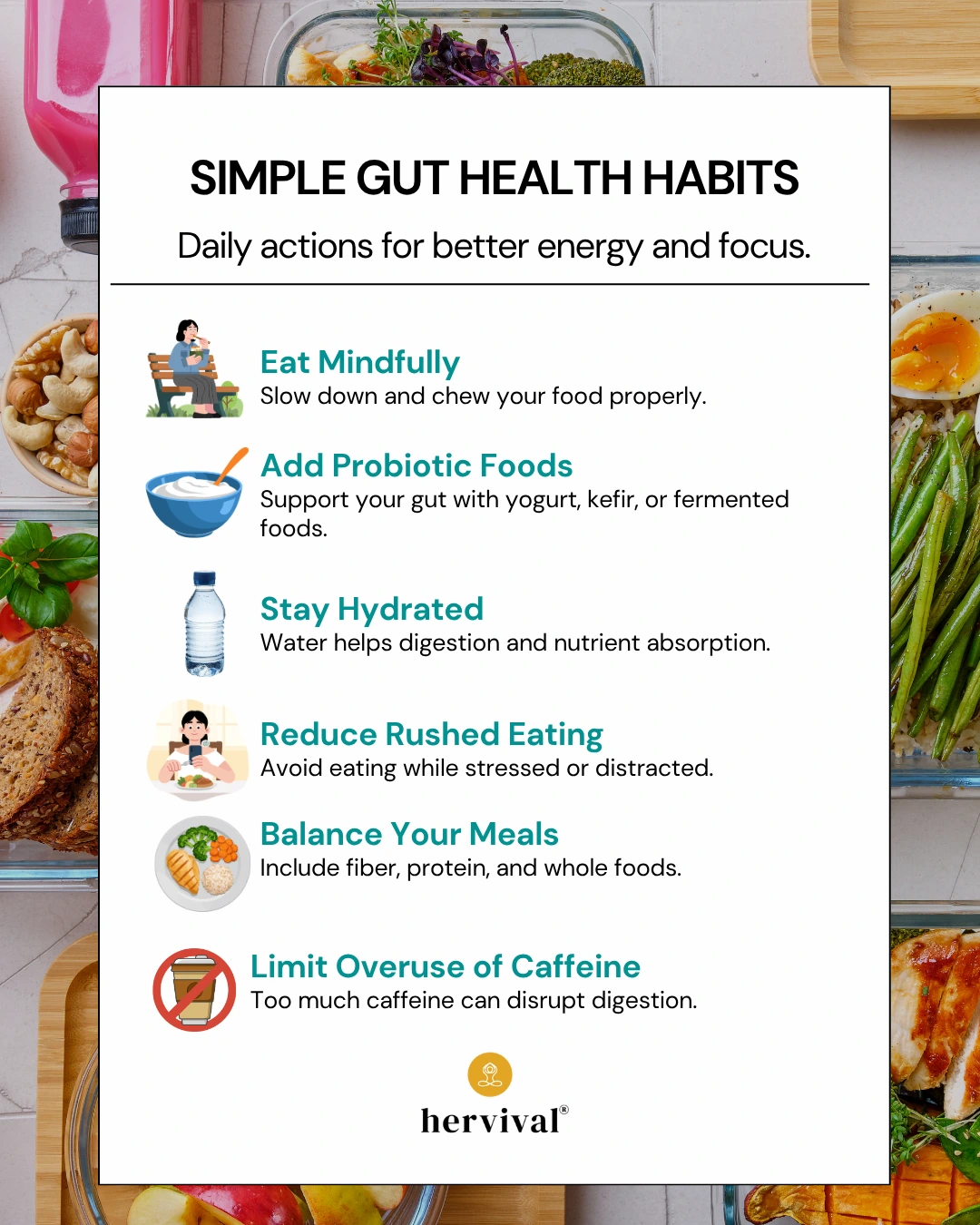
The good news is that improving gut health for high-performers doesn’t require complicated routines.
Small, consistent habits can make a powerful difference.
1. Practice Mindful Eating (Even on Busy Days)
Instead of eating while working or scrolling:
Slow down your pace
Chew your food thoroughly
Take a few breaths before eating
This helps your body:
Digest food more efficiently
Reduce bloating and discomfort
Absorb nutrients better
Even one mindful meal a day can shift your digestion.
2. Add Probiotic and Gut-Friendly Foods
Your gut thrives on beneficial bacteria.
Simple additions include:
Yogurt or kefir
Fermented foods like kimchi or sauerkraut
Fiber-rich foods like oats, fruits, and vegetables
These support:
A balanced microbiome
Better digestion
Improved mood and energy
3. Stay Consistently Hydrated
Hydration is often overlooked but essential.
Water helps:
Break down food
Transport nutrients
Maintain gut lining health
If you’re busy, try:
Keeping a water bottle visible
Drinking water between meetings
Pairing hydration with daily routines
Gut Health for High-Performers in Real Life
Imagine this:
You start your day with coffee only.
Skip breakfast.
Eat lunch quickly between meetings.
By mid-afternoon, your energy drops, and your focus fades.
Now compare that to:
A simple, nourishing breakfast
Drinking water consistently
Taking time to chew and pause
Nothing extreme has changed.
But your energy feels more stable.
Your thinking feels clearer.
That’s the difference gut health can make.
Building Sustainable Gut Health Habits
The goal of gut health for high-performers is not perfection.
It is sustainability.
Start small:
One mindful meal a day
One gut-friendly food added daily
One consistent hydration habit
Over time, these small actions compound into:
Better energy
Stronger focus
Greater resilience
A Broader Perspective on Performance
High performance is often associated with speed and output.
But real, sustainable performance comes from:
How well your body is supported
How consistently is your energy maintained
How clearly can your mind think
This connects with insights in Balanced Leadership: Work, Wellbeing, and Purpose, where long-term success is built through alignment, not depletion.
Gut health for high-performers is a quiet foundation of success.
It doesn’t demand more time.
It asks for more awareness.
Because when your gut is supported:
Your energy stabilizes
Your focus sharpens
Your leadership strengthens
And that is what allows you to perform, not just more, but better.
Stay Connected With Hervival
If this resonated with you, you’re invited to subscribe to the Hervival Newsletter.
Inside, you’ll receive:
Simple, science-backed wellness tips
Practical habits for busy professionals
Tools to help you lead with energy and clarity
Because better performance doesn’t come from doing more, it comes from supporting yourself better.
References
Cryan, J. F., & Dinan, T. G. (2012). Mind-altering microorganisms: The impact of the gut microbiota on brain and behaviour. Nature Reviews Neuroscience.
Mayer, E. A. (2016). The Mind-Gut Connection. Harper Wave.
World Health Organization. (2022). Healthy diet and wellbeing.

Become a part of Our Holistic Wellness & Self-Care Community! Join our membership TODAY!

Try all premium features for 7 days. Cancel anytime, or continue with your selected plan.
© 2021-2025 Hervival® is a trademark under Global Thrive Enterprise LLC . ©2025 Hervival. All Rights Reserve.