
Leadership Without Burnout: Choosing Wholeness Over Exhaustion
Leadership without burnout is becoming one of the most important conversations in today's workplace. For too long, leadership has been measured by how much people could carry, how long they could work, and how often they could put everyone else's needs before their own.
Many professionals, especially women in leadership, have been praised for being constantly available, solving every problem, and pushing through exhaustion without complaint.
Over time, this has created a culture in which burnout is often mistaken for commitment, and self-sacrifice is celebrated as leadership.
But the strongest leaders are beginning to challenge that narrative.
They are discovering that sustainable leadership isn't built by running on empty. It's built by leading from a place of wholeness, where physical health, emotional wellbeing, mental clarity, and purpose work together to support lasting impact.
Why Leadership Without Burnout Matters More Than Ever
Today's leaders are navigating constant change, economic uncertainty, digital overload, and increasing workplace expectations. While technology has made work more connected, it has also made it harder to disconnect.
According to the World Health Organization, burnout is an occupational phenomenon resulting from chronic workplace stress that is not effectively managed. If left unaddressed, it can affect productivity, relationships, decision-making, and overall health.
Burnout doesn't always begin with dramatic symptoms.
It often starts quietly through:
Constant fatigue
Difficulty concentrating
Emotional numbness
Irritability
Reduced creativity
Poor sleep
Feeling overwhelmed by simple tasks
Over time, these patterns make it increasingly difficult to lead effectively.
This is why leadership today requires more than technical expertise. It requires emotional awareness, recovery, and resilience.
Leading From Wholeness Means Leading With Your Whole Self
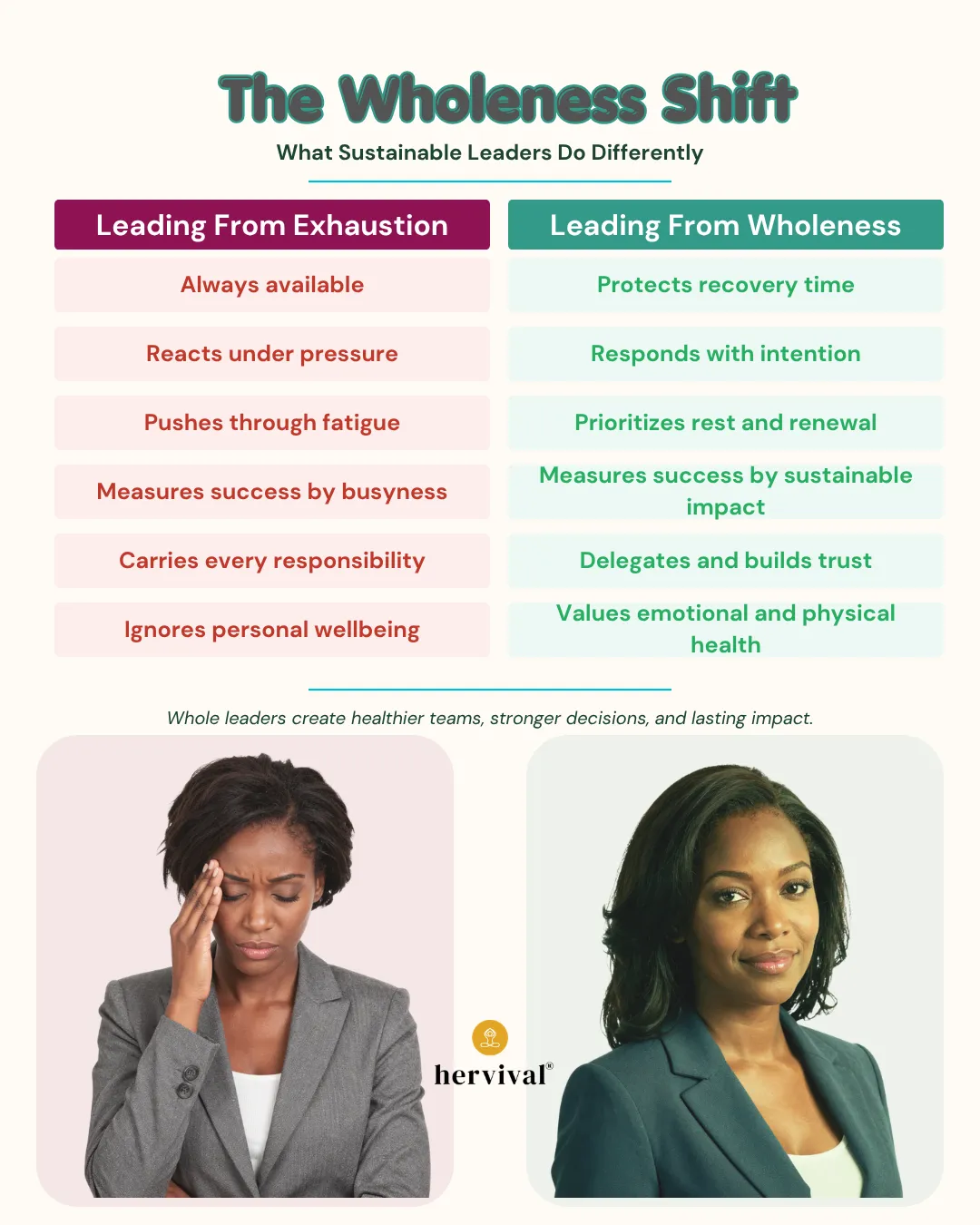
One of the biggest shifts happening in modern leadership is the move toward leading from wholeness.
Wholeness doesn't mean having a perfect work-life balance or never experiencing stress.
Instead, it means recognizing that your wellbeing is part of your leadership, not separate from it.
Whole leaders understand that:
Rest supports better thinking.
Emotional awareness improves communication.
Healthy boundaries protect long-term performance.
Recovery strengthens resilience.
Self-care improves the ability to care for others.
The Hidden Cost of Leading While Exhausted
When leaders ignore their own wellbeing, the effects often extend beyond themselves.
Exhaustion can influence:
Decision-making
Team morale
Creativity
Patience
Conflict resolution
Strategic thinking
Leaders operating from chronic stress may become more reactive, less present, and increasingly disconnected from their teams.
Research in neuroscience has shown that prolonged stress affects the prefrontal cortex, the area of the brain responsible for planning, judgment, and emotional regulation.
Our article, Leadership and Stress Hormones: Why Regulated Minds Lead Better, explores how chronic stress alters how leaders think, communicate, and make decisions, underscoring the importance of recovery for effective leadership.
Emotional Wellbeing in Leadership Is a Competitive Advantage
Many people still think emotional wellbeing belongs outside the workplace.
The opposite is true.
Leaders with strong emotional wellbeing in leadership often demonstrate greater:
Self-awareness
Adaptability
Empathy
Confidence during uncertainty
Emotional regulation
Team trust
Rather than reacting impulsively, they pause, reflect, and respond intentionally.
These qualities help create psychologically safe workplaces where innovation and collaboration can thrive.
Healthy Leadership Habits Build Sustainable Success
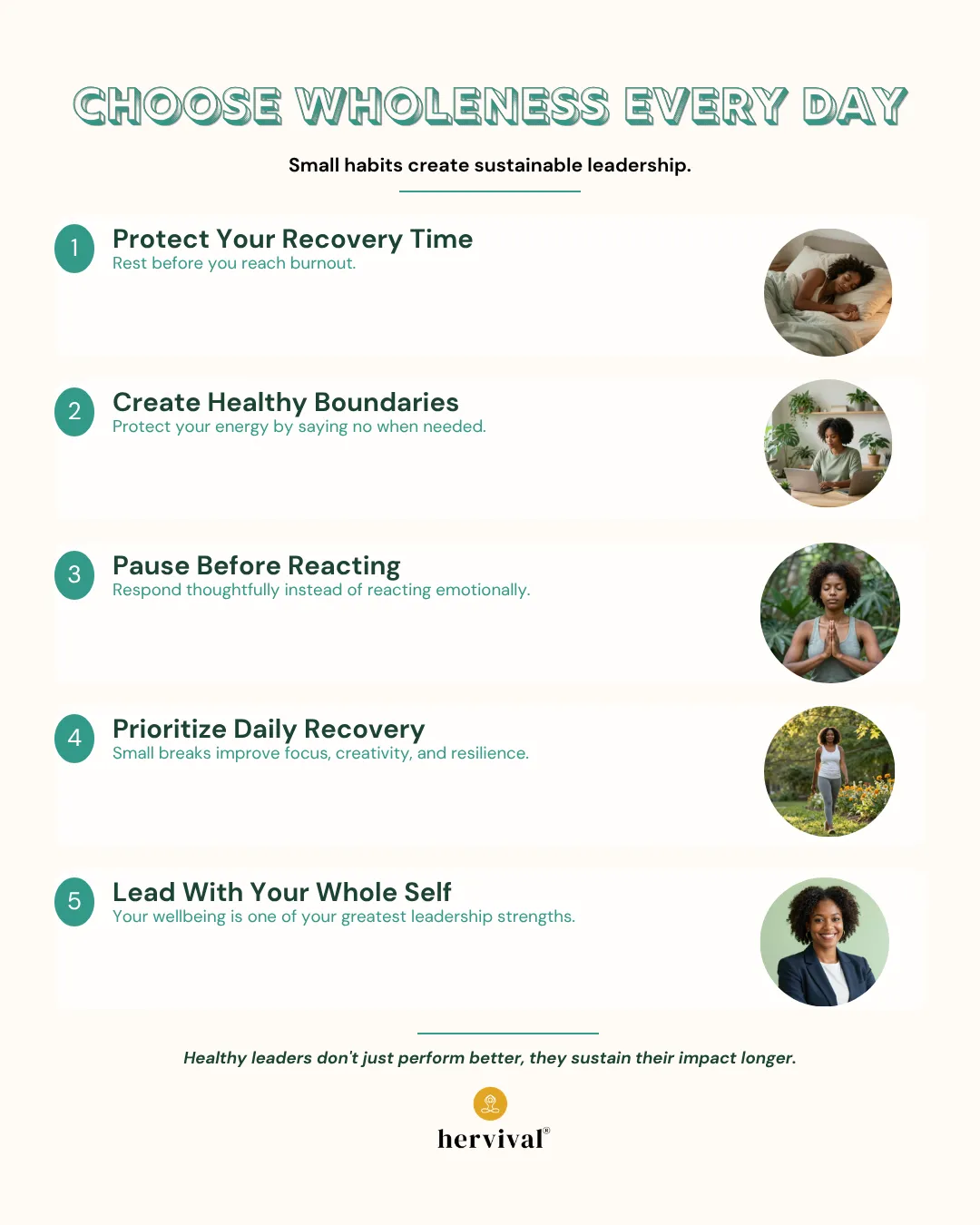
Healthy leadership is rarely built through a single big change.
It grows through small, consistent habits repeated every day.
Here are practical habits that support healthy leadership:
Start the Day With Intention
Before opening emails or attending meetings, spend a few quiet minutes setting your priorities and checking in with yourself.
Ask:
How am I feeling today?
What do I need to lead well?
What truly deserves my attention?
Schedule Recovery, Not Just Productivity
Recovery is part of performance.
Build small breaks into your calendar to:
Stretch
Walk outside
Breathe deeply
Drink water
Reset between meetings
Even two to five minutes can improve focus and emotional regulation.
If you're looking for practical recovery strategies, our article Mental Health Habits That Last Beyond Awareness Months explores small daily practices that support long-term resilience.
Protect Your Sleep
Quality sleep is one of the most overlooked leadership tools.
Sleep supports:
Memory
Emotional regulation
Decision-making
Creativity
Stress recovery
Our article Poor Sleep and Leadership: How Rest Impacts Decision-Making explains why consistent sleep is essential for sustainable performance.
Set Boundaries Around Availability
Being constantly available does not make someone a better leader.
Healthy boundaries help preserve energy for meaningful work.
Consider:
Turning off work notifications after hours
Blocking focus time on your calendar
Saying no to unnecessary commitments
Protecting time for family, hobbies, and rest
Boundaries create capacity.
Leadership Resilience Is Built Through Recovery
Many people think resilience means enduring more pressure.
In reality, leadership resilience grows through balancing effort with recovery.
Resilient leaders:
Recognize signs of stress early.
Ask for support when needed.
Learn from setbacks.
Prioritize physical and emotional health.
Create routines that sustain energy over time.
Resilience is not about never feeling overwhelmed.
It is about recovering well enough to continue leading with clarity.
This reflects the ideas explored in Wellness Is the New Leadership Currency for Sustainable Success, where wellbeing is presented as one of the greatest assets a modern leader can develop.
Choosing Wholeness Changes Workplace Culture
Leadership is contagious.
When leaders normalize exhaustion, teams often feel pressured to do the same.
But when leaders model:
Rest
Healthy boundaries
Emotional honesty
Compassion
Self-awareness
they create workplaces where people feel safer, healthier, and more engaged.
Choosing wholeness sends a powerful message:
Success should never require sacrificing your health.
Reflection
Leadership without burnout is not about doing less.
It is about leading differently.
It means replacing survival mode with sustainability.
Replacing constant pressure with intentional recovery.
Replacing exhaustion with emotional resilience.
And replacing the belief that leaders must always carry everything alone with the understanding that caring for yourself strengthens your ability to care for others.
The future of leadership will not belong to those who simply work the hardest.
It will belong to those who have the wisdom to lead from wholeness.
Stay Connected With Hervival
If this reflection resonated with you, subscribe to the Hervival Newsletter for practical wellness insights, leadership resources, and evidence-based strategies that help you build a healthier, more sustainable approach to work and life.
Every edition is designed to help you grow your leadership without sacrificing your wellbeing, because thriving leaders create thriving communities.
Research & References
World Health Organization. (2019). Burnout is an "occupational phenomenon".
American Psychological Association. Work in America Survey (2023).
Maslach, C., & Leiter, M. P. (2016). Burnout: A Multidimensional Perspective.
Davidson, R. J., & McEwen, B. S. (2012). Social Influences on Neuroplasticity and Wellbeing.
Gross, J. J. (2015). Emotion Regulation: Current Status and Future Prospects.


