Wellness Is the New Leadership Currency for Sustainable Success
Wellness is the new leadership urrency because the most effective leaders today are no longer defined only by productivity, authority, or performance.
They are increasingly defined by:
emotional stability
mental clarity
resilience
self-awareness
sustainable energy
the ability to lead without burnout
For years, leadership, especially for women, often came with an unspoken expectation:
keep pushing, keep performing, keep carrying everything.
Many women in professional spaces learned to equate success with exhaustion.
The pressure to:
overperform
remain emotionally available
support everyone else
lead under constant stress
became normalized.
But something is shifting.
More people are beginning to realize that leadership built on chronic stress eventually becomes unsustainable.
And that is why wellness-driven leadership matters now more than ever.
Why Wellness Is Becoming a Leadership Advantage
Currency symbolizes value, influence, and power.
When we say Wellness Is the New Leadership Currency, it means that wellbeing itself has become one of the most valuable leadership assets a person can have.
Healthy leaders often:
think more clearly
regulate emotions better
communicate more effectively
build healthier workplace cultures
make stronger long-term decisions
Research from the World Health Organization and the American Psychological Association continues to show that chronic stress and burnout negatively affect focus, emotional regulation, workplace performance, and overall well-being.
In contrast, emotionally grounded leaders tend to create:
stronger teams
healthier communication
sustainable growth
safer workplace environments
This reflects the same ideas explored in Leadership and Stress Hormones: Why Regulated Minds Lead Better, where emotional regulation directly affects leadership presence and decision-making.
Leadership Without Burnout Is the New Standard
For a long time, burnout was treated almost like proof of ambition.
People celebrated:
working without rest
constant availability
emotional overextension
sacrificing health for productivity
But leadership without burnout is becoming a new measure of wisdom, not weakness.
Modern leadership increasingly recognizes that:
exhausted leaders struggle to think clearly
chronic stress affects creativity and focus
emotional fatigue weakens communication
burnout reduces long-term effectiveness
The truth is:
You cannot lead sustainably if your nervous system never gets a chance to recover.
This is especially important for women balancing careers, caregiving, emotional labor, and community responsibilities simultaneously.
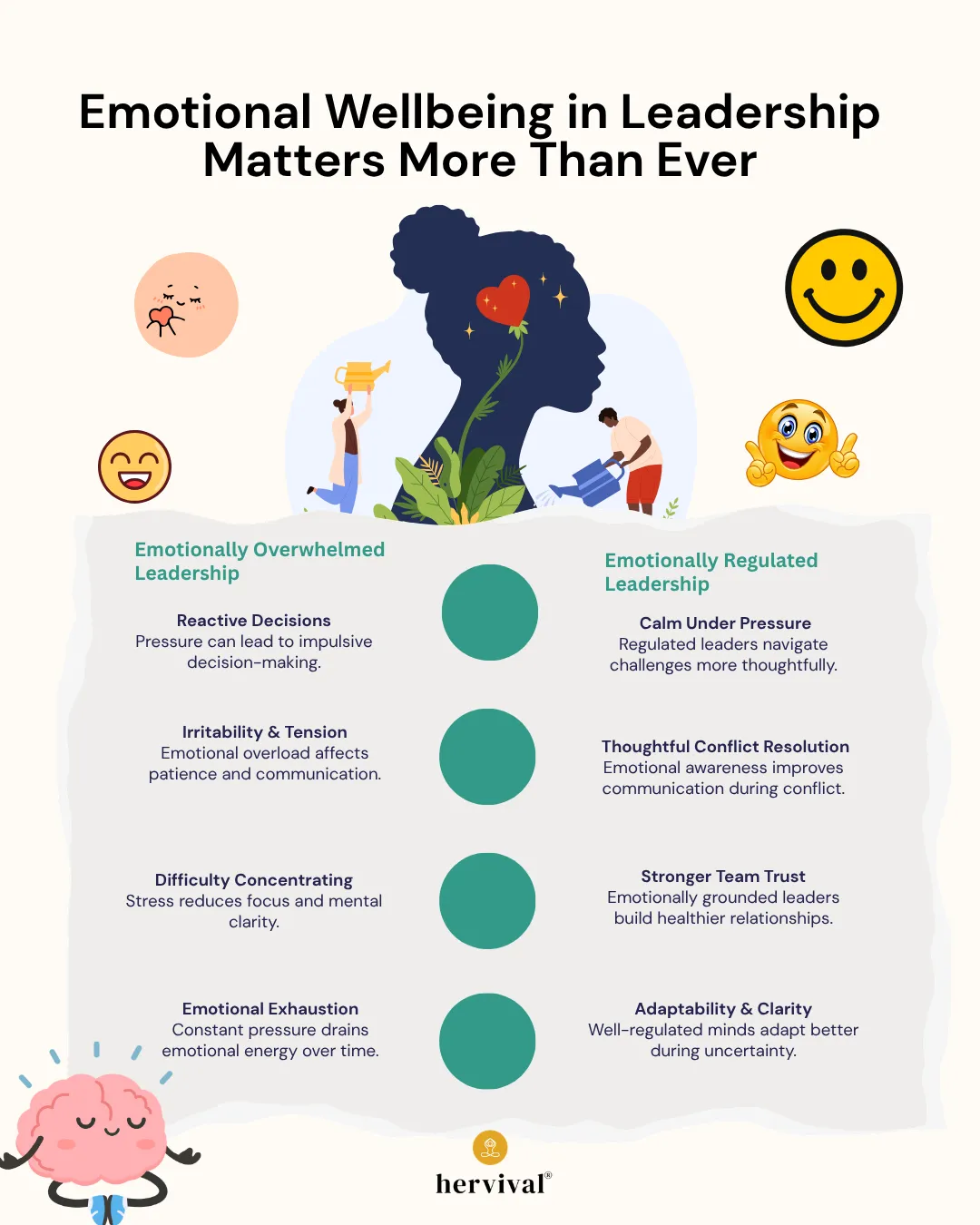
Emotional Wellbeing in Leadership Matters More Than Ever
One of the biggest leadership shifts happening today is the growing understanding that emotional well-being affects professional performance.
Leaders who are emotionally overwhelmed often experience:
reactive decision-making
irritability
reduced patience
difficulty concentrating
emotional exhaustion
Meanwhile, emotionally regulated leaders are often better able to:
navigate pressure calmly
handle conflict thoughtfully
build trust within teams
remain adaptable during uncertainty
This aligns closely with the reflections in Emotional Regulation in Leadership for Better Decisions, where emotional awareness strengthens leadership clarity rather than weakening authority.
Wellness Is Not Weakness
For many women, especially Black women and women in leadership spaces, wellness was historically treated as secondary to achievement.
Rest often felt “earned” only after exhaustion.
But sustainable leadership wellness challenges that mindset completely.
Wellness is not laziness.
Rest is not a lack of ambition.
Recovery is not weakness.
In reality:
sleep improves decision-making
movement supports mental clarity
emotional regulation improves communication
recovery strengthens resilience
boundaries protect long-term well-being
The healthiest leaders are not the ones who ignore their humanity.
They are the ones who learn how to protect it.
Healthy Leadership Habits Create Long-Term Success
Sustainable success rarely comes from intensity alone.
It is often built through consistent healthy leadership habits.
Small daily choices shape long-term leadership performance more than people realize.
These habits may include:
protecting sleep and recovery
reducing digital overwhelm
taking mindful breaks during work
setting emotional boundaries
eating consistently and nourishing the body
creating routines that support mental clarity
practicing reflection and emotional awareness
These practices help leaders stay emotionally grounded even during high-pressure seasons.
This connects naturally with Gut Health for High-Performers: Daily Habits for Better Energy, where physical wellbeing directly supports mental and emotional performance.
Workplace Culture Is Also Changing
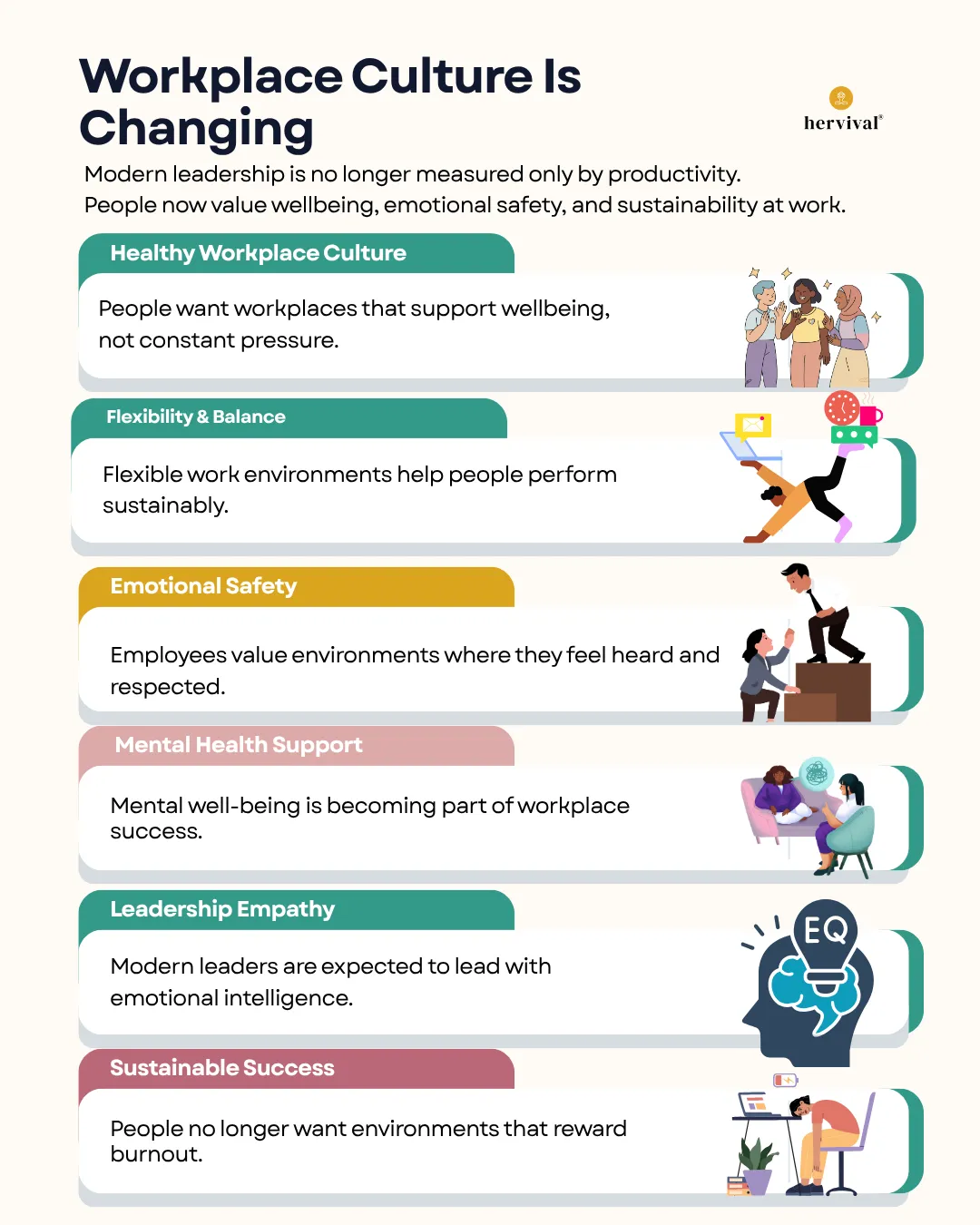
Organizations themselves are beginning to recognize that workplace wellbeing and resilience directly affect productivity, retention, and innovation.
Employees increasingly value:
healthy workplace cultures
flexibility
emotional safety
mental health support
leadership empathy
work-life sustainability
People no longer want environments that reward burnout while ignoring well-being.
And honestly, that shift is necessary.
Because sustainable success should not require emotional depletion.
What Wellness-Driven Leadership Looks Like in Everyday Life
Wellness-driven leadership is not about perfection.
It is about creating leadership habits that enable people to thrive rather than constantly survive.
In everyday life, this can look like:
pausing before reacting emotionally
protecting rest without guilt
saying no when necessary
asking for support
prioritizing emotional recovery
leading with empathy instead of pressure
creating healthier rhythms at work and home
Small shifts in self-care often lead to powerful changes in leadership presence over time.
Reflect and Think
At its core, wellness is the new leadership currency because leadership is evolving.
People are no longer inspired only by authority or productivity.
They are increasingly drawn to leaders who are:
emotionally grounded
self-aware
healthy
sustainable
compassionate
resilient without self-destruction
The future of leadership is not built on burnout.
It is built on a well-being strong enough to last.
Get More From Hervival
If this reflection resonated with you, subscribe to the Hervival Newsletter for thoughtful wellness insights, emotional resilience tools, sustainable leadership reflections, and practical wellbeing resources designed for women navigating leadership, healing, growth, and modern work culture.
At Hervival, we believe success should support your wellbeing, not cost you your peace.
Research & References
World Health Organization. (2022). Mental Health at Work.
American Psychological Association. (2023). Stress in America Report.
Harvard Business Review. (2021). The Burnout Epidemic and Leadership Sustainability.
Davidson, R. J., & McEwen, B. S. (2012). Social influences on neuroplasticity and wellbeing. Nature


