
Mental Health Habits That Last Beyond Awareness Months
Mental Health Habits are what turn awareness into real change, and without them, even the most powerful awareness campaigns fade quickly.
Every May, during Stress Awareness Month, conversations around burnout, anxiety, and emotional well-being become louder. Social media fills with reminders to “take care of yourself,” workplaces host wellness talks, and people feel temporarily inspired to do better.
But then June comes.
And life goes back to normal.
Deadlines return. Notifications pile up. Sleep gets pushed aside.
And slowly, the awareness fades, but the stress doesn’t.
Why Awareness Alone Isn’t Enough
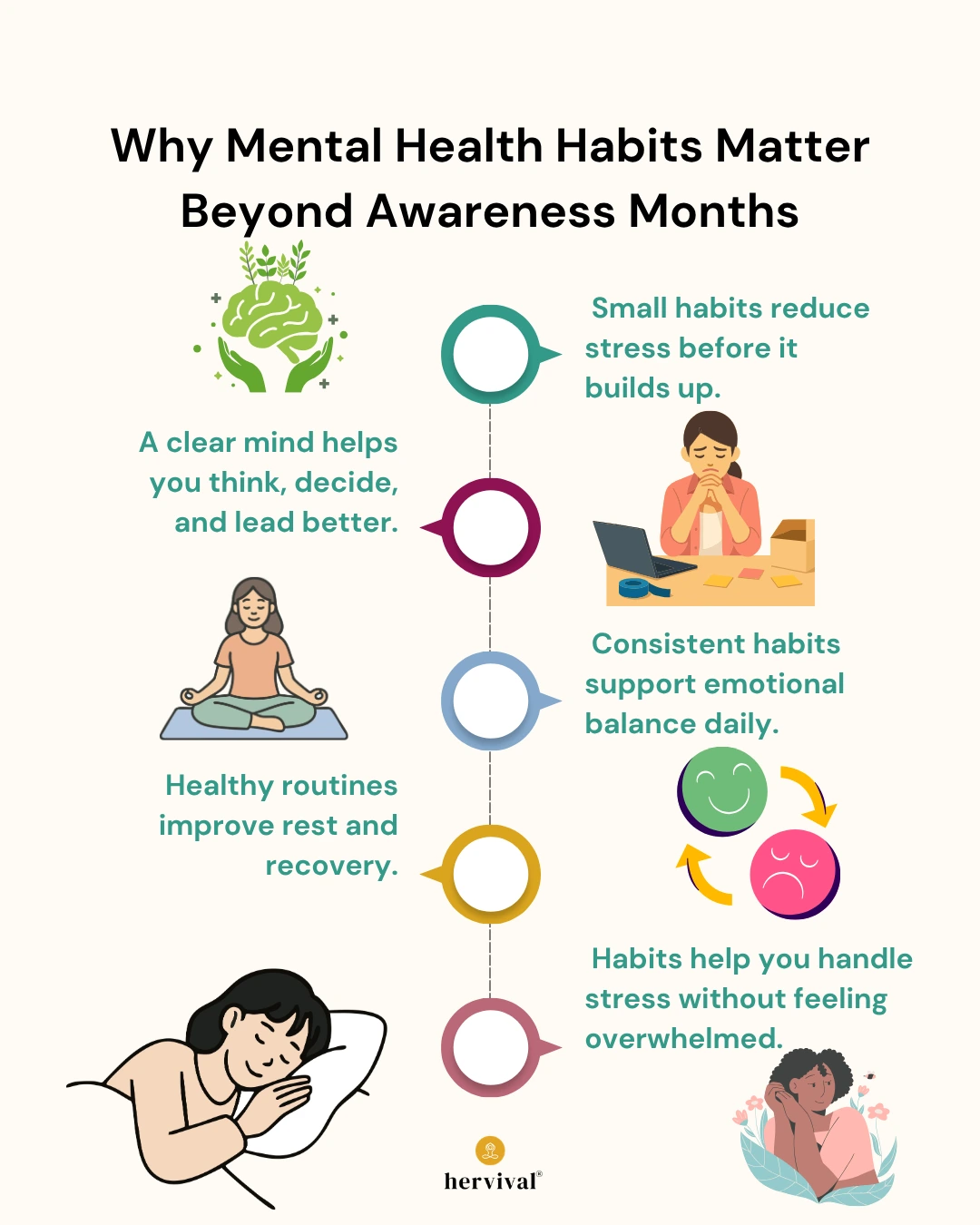
Awareness is important, but it is not the same as transformation.
According to the American Psychological Association, over 75% of adults in the U.S. report experiencing physical or emotional symptoms of stress, including fatigue, irritability, and difficulty concentrating.
For Gen Z and young professionals, this often looks like:
Skipping meals or relying on fast food during busy workdays
Staying up late scrolling, then waking up exhausted
Feeling mentally drained but still pushing through
Struggling to disconnect from work or social pressure
Awareness tells you stress exists.
But mental health habits are what actually reduce it.
How Mental Health Habits Shape Your Daily Life
The truth is, your mental health is not shaped in big moments; it is shaped in small, repeated ones.
Mental health habits influence:
How clearly you think during important decisions
Your response during stressful conversations
How well you sleep and recover
How you show up in your relationships
Without consistent habits, stress becomes your default.
But with the right routines, resilience becomes your baseline.
Mental Health Habits You Can Actually Stick To
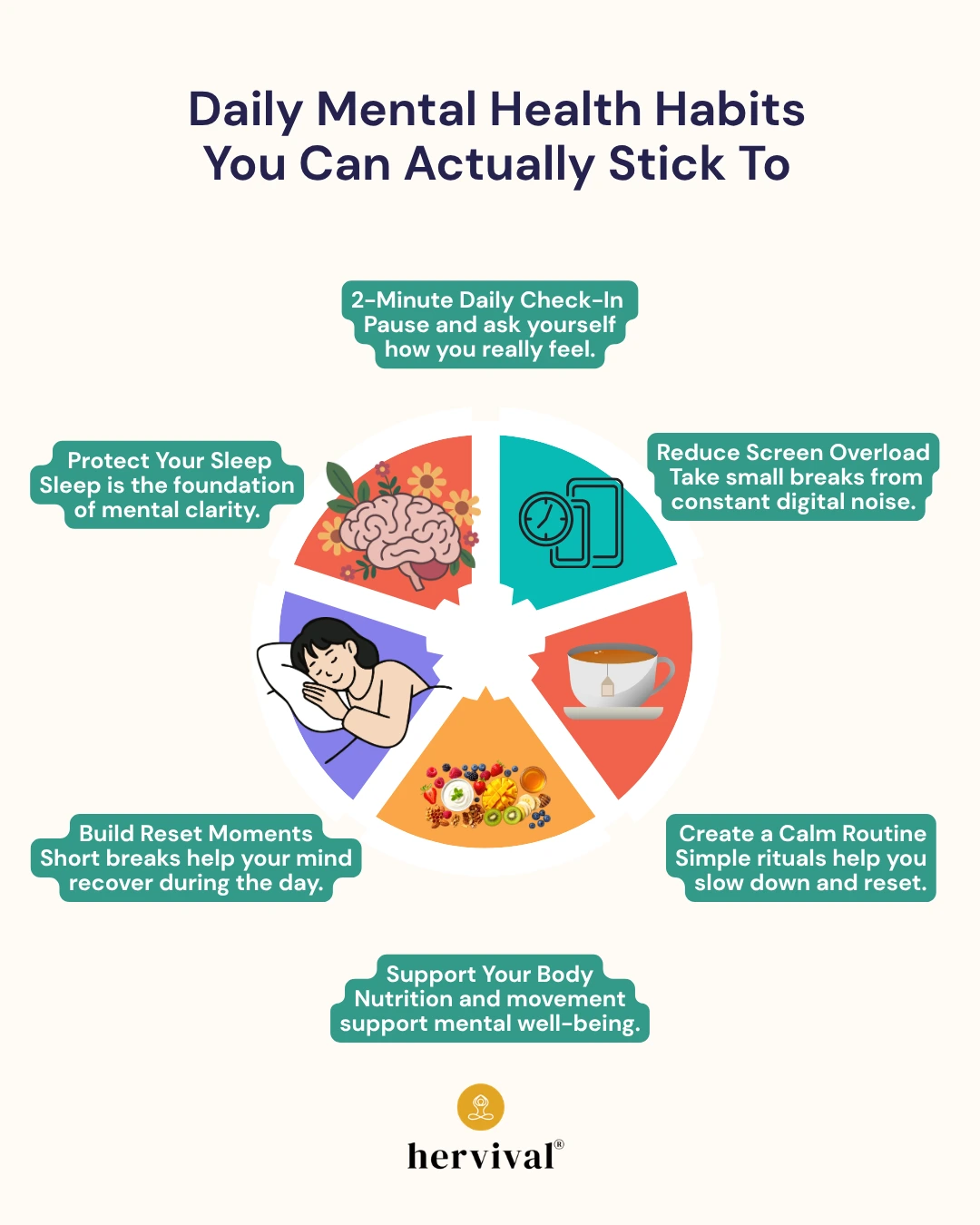
The goal isn’t to overhaul your entire life overnight.
It’s to build habits that fit into your real, everyday routine.
1. Start With a 2-Minute Daily Check-In
Pause once a day and ask:
How do I feel right now?
What is draining me today?
This small awareness creates space before burnout builds.
2. Protect Your Sleep Like It Matters (Because It Does)
Sleep is one of the most overlooked mental health habits.
Lack of sleep affects:
Mood regulation
Focus and memory
Emotional stability
If your sleep is off, everything else feels harder.
You can explore deeper strategies in Seven Types of Rest: How to Restore Your Energy and Wellbeing, where rest is reframed beyond just sleep.
3. Reduce Digital Overload—Even Slightly
You don’t need a full detox. Start small:
No phone 30 minutes before bed
Take short breaks from screens during the day
Even small boundaries can reduce mental fatigue.
4. Build Simple Reset Moments Into Your Day
Your day should not be one long stretch of pressure.
Try:
A short walk between tasks
Deep breathing before meetings
Stepping away instead of pushing through
These resets help regulate your nervous system.
5. Create a Personal “Calm Routine”
This can be something simple and consistent:
Lighting a candle
Drinking herbal tea
Sitting in silence for a few minutes
6. Support Your Mind Through Your Body
Your mental health is deeply connected to your physical health.
Nutrition, movement, and hydration all matter.
You can explore this further in How Your Mind Affects Your Immune System: 10 Ways to Stay Healthy, which explains how your mental and physical health work together.
7. Use Sensory Tools to Reduce Stress
Sometimes, your body needs support before your mind catches up.
Simple tools like scent can help:
Lavender for calm
Peppermint for focus
Explore more in Aromatherapy for Stress Relief: Boost Your Mood Naturally, where small sensory shifts create real emotional change.
From Awareness to Year-Round Resilience
May is a reminder.
But your habits are the real work.
Mental health habits are what carry you through:
Busy seasons
Emotional challenges
High-pressure decisions
They are not about perfection.
They are about consistency.
And the more you practice them, the more natural they become.
A Real-Life Reflection
Imagine this:
It’s a regular weekday.
You wake up tired, check your phone immediately, rush through your morning, skip breakfast, and jump into work already overwhelmed.
Now imagine a small shift:
You pause for 2 minutes before starting your day
You eat something simple
You step outside for a short walk
You log off a little earlier
Nothing dramatic.
But everything feels different.
That’s the power of small, consistent habits.
Mental health habits are not built in moments of motivation; they are built in moments of choice.
The choice to pause.
Choice to rest.
The choice to care for yourself even when life feels busy.
And over time, those choices become your lifestyle.
Stay Connected With Hervival
If this spoke to you, you’re invited to subscribe to the Hervival Newsletter.
Inside, you’ll receive:
Practical wellness tools you can actually use
Guidance for building sustainable habits
Support for your mental, emotional, and leadership growth
Because awareness is just the beginning, but real change happens in what you do next.
References
American Psychological Association. (2023). Stress in America Survey.
World Health Organization. (2022). Mental health at work.
Centers for Disease Control and Prevention. (2022). Sleep and health.


