
Poor Sleep and Leadership: How Rest Impacts Decision-Making
Poor sleep and leadership are more connected than many professionals realize. A leader may appear composed during meetings, respond quickly to emails, and keep projects moving forward. Yet behind that productivity, a lack of rest may quietly erode the most important leadership skill of all, clear thinking.
When sleep is consistently shortened or disrupted, the brain’s ability to process information, regulate emotions, and make balanced decisions begins to decline. For leaders responsible for teams, strategy, and complex choices, this can create subtle but powerful consequences.
Many people believe leadership success depends on working longer hours. However, science increasingly shows that rested minds make better decisions than exhausted ones.
Why Poor Sleep and Leadership Affect Decision-Making
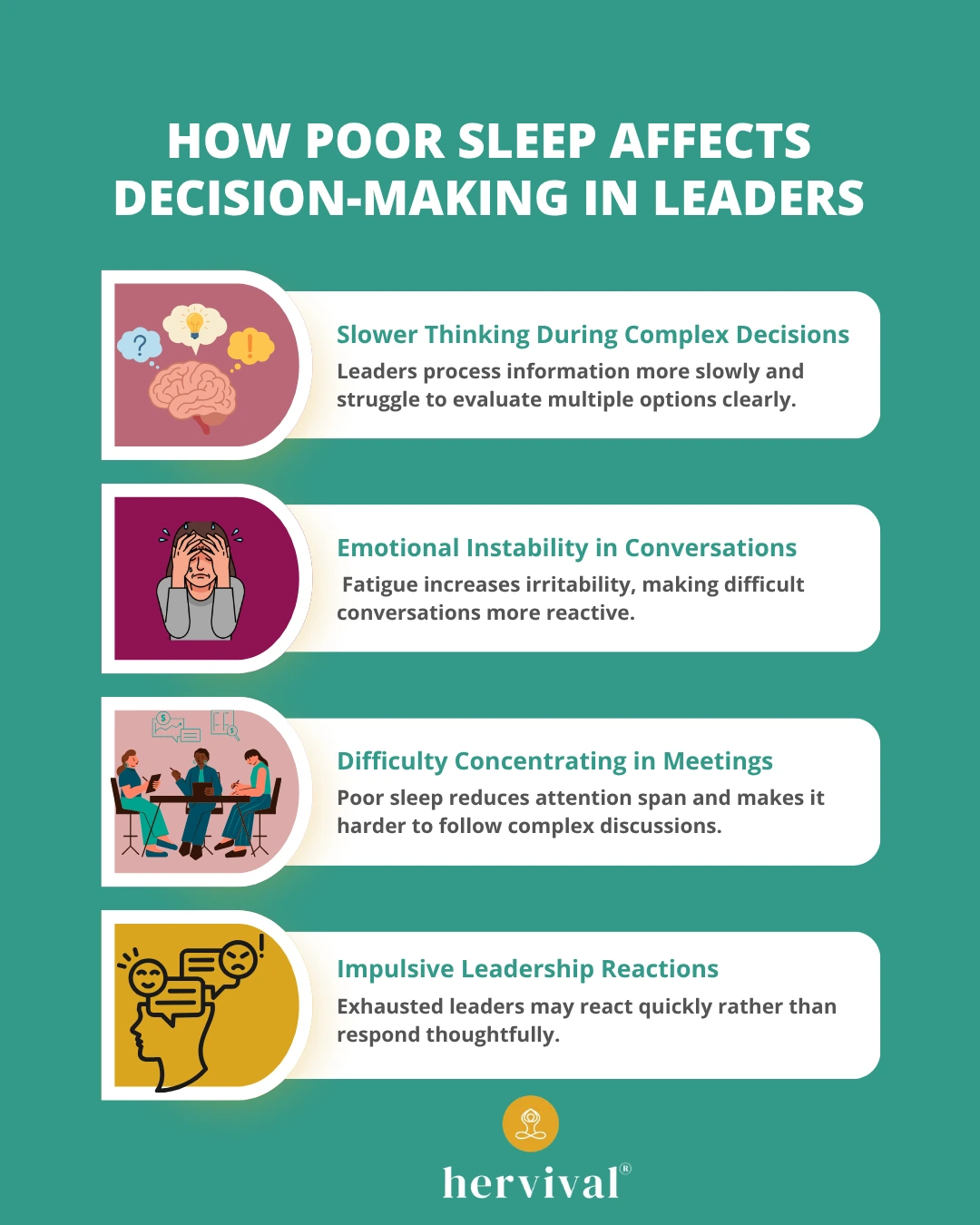
One of the biggest challenges connecting poor sleep and leadership is how sleep deprivation affects the brain.
When leaders do not get enough rest, the prefrontal cortex, the part of the brain responsible for reasoning, judgment, and planning, functions less effectively. At the same time, the brain’s emotional centers become more reactive.
This can lead to:
Slower thinking during complex decisions
Increased irritability during conversations
Difficulty concentrating in meetings
Impulsive responses rather than thoughtful leadership
According to NIH sleep research, even a single night of reduced sleep can significantly affect cognitive performance and emotional regulation.
In leadership environments where decisions impact teams, budgets, and strategy, this hidden fatigue can quietly influence outcomes.
The Hidden Signs of Poor Sleep in Leadership
The connection between Poor Sleep and Leadership is not always obvious. Many leaders normalize exhaustion because busy schedules feel unavoidable.
However, several subtle signs often appear when sleep is lacking:
Difficulty focusing on strategic tasks
Forgetting small but important details
Feeling mentally drained early in the day
Reacting emotionally instead of thoughtfully
Over time, these patterns may lead to burnout or decreased leadership effectiveness.
This is why conversations about sleep are increasingly appearing in leadership wellness discussions.
Practical Ways Leaders Can Improve Sleep and Mental Clarity
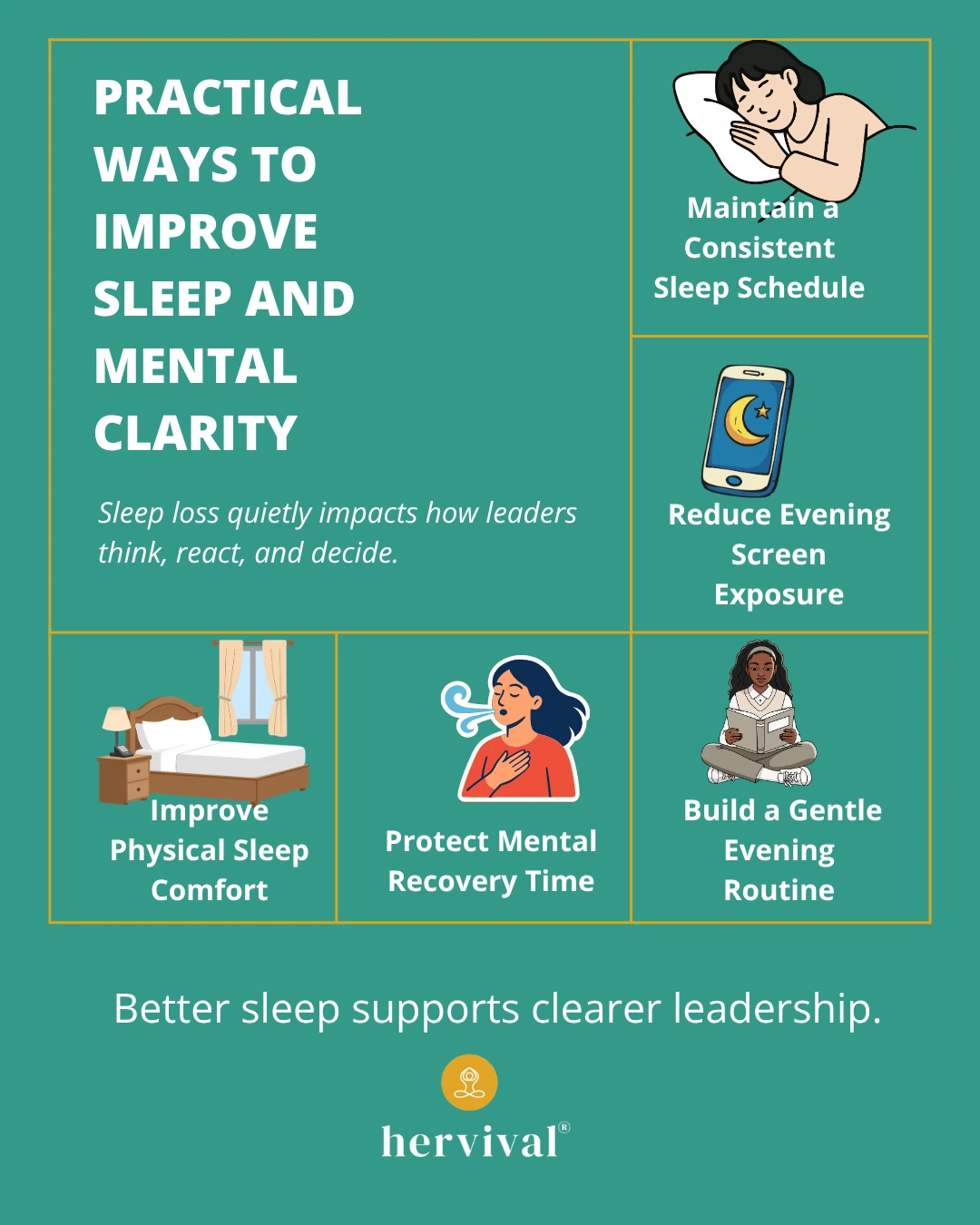
The encouraging news is that improving sleep does not always require dramatic life changes. Small, consistent habits can significantly improve both rest and cognitive performance.
Here are practical strategies leaders can begin today.
1. Create a Consistent Sleep Schedule
Going to bed and waking up at the same time each day helps regulate the body’s internal clock. Even small shifts toward consistency can improve sleep quality.
2. Reduce Evening Screen Exposure
Bright screens suppress melatonin, the hormone responsible for sleep. Turning off screens 30–60 minutes before bedtime can help the brain prepare for rest.
3. Build a Gentle Evening Routine
Simple habits such as journaling, reading, stretching, or drinking herbal tea can signal the body that it is time to unwind.
4. Protect Mental Recovery Time
Leaders often carry mental stress into bedtime. Taking short breaks throughout the day can help reduce emotional overload before sleep.
5. Improve Physical Sleep Comfort
Small physical adjustments can make a significant difference in rest quality. Our article on Healthy Sleep Positions for Better Sleep and Less Aches explores simple body positioning techniques that support deeper, more comfortable sleep.
Understanding Rest Beyond Sleep
Improving sleep is essential, but rest itself can take many forms. Physical rest, emotional rest, and mental recovery all support clearer leadership.
In our article 7 Types of Rest: How to Restore Your Energy and Well-being, we explore how different types of rest can restore energy, focus, and emotional balance.
When leaders understand these different forms of recovery, they begin to see that rest is not the opposite of productivity, it is what sustains it.
A Healthier Future for Leadership and Well-Being
The conversation around poor sleep and leadership is changing. More professionals are recognizing that leadership success should not require chronic exhaustion.
Clear thinking, emotional regulation, and thoughtful decision-making all depend on a well-rested brain.
By protecting sleep and prioritizing recovery, leaders strengthen not only their personal health but also the quality of the decisions that shape their organizations.
Stay Connected With Hervival
If this reflection resonated with you, we invite you to subscribe to the Hervival newsletter.
Our community shares practical wellness insights, leadership resources, and supportive tools designed to help professionals succeed in their health, leadership, and personal growth journeys.
Subscribers also receive updates on upcoming Hervival initiatives and new articles that support sustainable leadership and well-being.


