
Gut Health for Leaders: Why Your Brain Depends on Your Gut
Gut Health for Leaders is about far more than digestion. The foods you eat every day influence how clearly you think, how calmly you respond under pressure, and how consistently you perform as a leader.
Many professionals develop leadership skills through books, coaching, and experience. While those are valuable, one of the most overlooked leadership tools is nutrition.
Your brain depends on a healthy gut to support concentration, memory, emotional regulation, and decision-making.
If you've ever felt mentally drained after skipping meals, struggled with brain fog during an important meeting, or noticed your patience disappear after relying on coffee and sugary snacks, your gut may be playing a bigger role than you realize.
The encouraging news is that small, intentional nutrition choices can support both your wellbeing and your leadership performance.
Why Gut Health for Leaders Matters
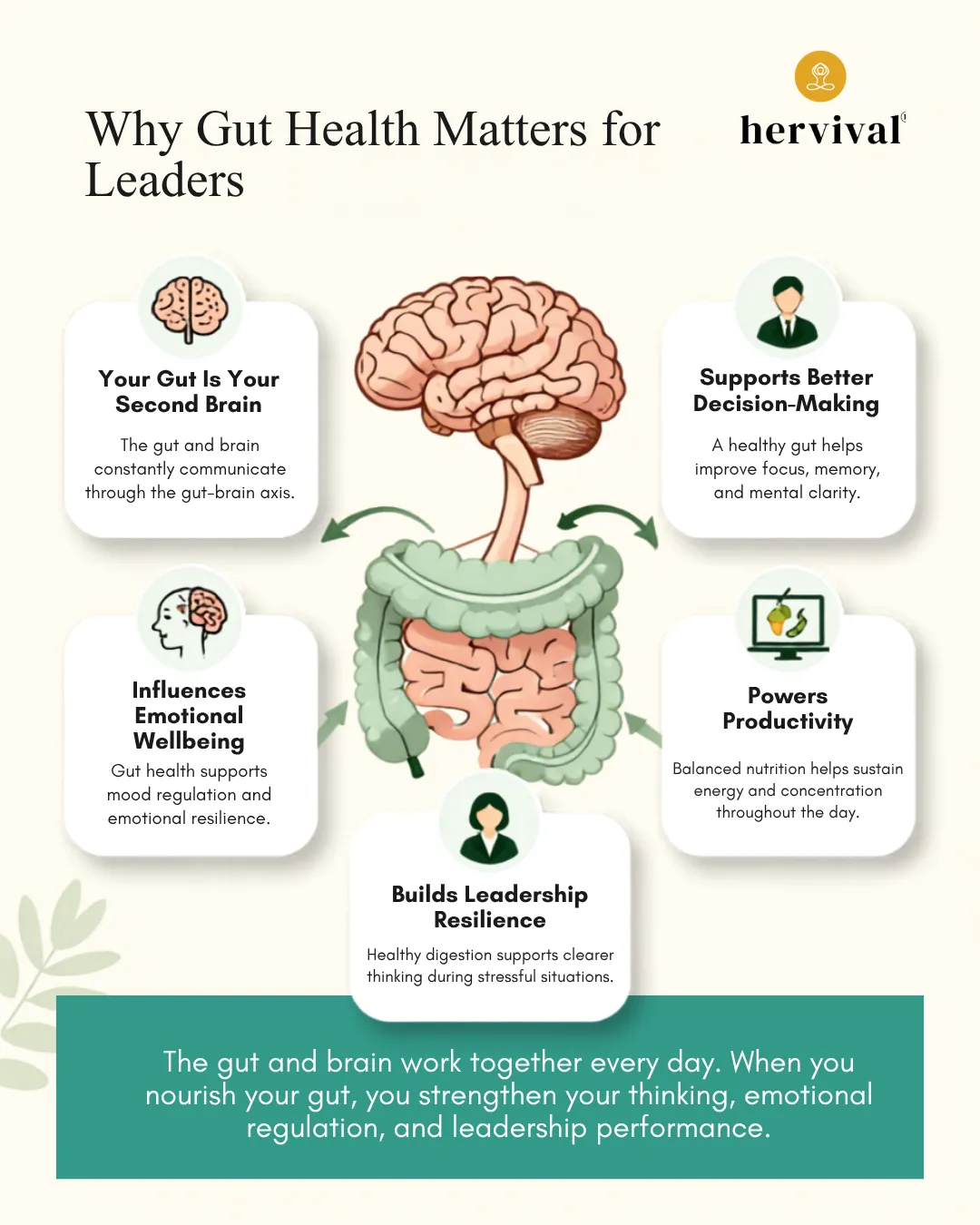
Scientists often refer to the gut as the body's "second brain."
Your digestive system contains trillions of microorganisms, collectively known as the gut microbiome, which communicate continuously with the brain through what researchers call the gut-brain axis.
This two-way communication influences:
Mood
Memory
Concentration
Stress response
Sleep quality
Emotional regulation
Cognitive performance
When your gut is healthy, your brain receives better support for the demanding work of leadership.
When your gut is struggling, however, it can contribute to fatigue, poor concentration, irritability, and slower thinking.
Leadership is not only mental.
It is biological.
Understanding the Gut-Brain Leadership Connection
The gut-brain leadership connection explains why nutrition directly influences workplace performance.
Approximately 90% of the body's serotonin, a neurotransmitter involved in mood regulation, is produced in the digestive system. A healthy gut also supports the production of compounds that influence memory, learning, and emotional balance.
When digestion is disrupted by chronic stress, poor eating habits, or inadequate sleep, leaders may notice:
Brain fog
Reduced focus
Lower productivity
Emotional reactivity
Difficulty making decisions
Increased fatigue
This is one reason why emotional regulation is difficult when the body itself lacks proper nourishment.
Our article, The Regulated Leader: How Calm Leadership Improves Decision-Making, explores how emotional regulation strengthens leadership, while good nutrition provides one of the biological foundations that enable it.
Nutrition for Productivity Begins Before the Workday
Many professionals begin their day with caffeine and little else.
While coffee may temporarily boost alertness, it cannot replace a balanced diet.
Nutrition for productivity starts with giving your brain a steady supply of nutrients throughout the day.
Instead of relying on energy spikes, focus on foods that provide sustained energy.
Examples include:
Oats
Eggs
Greek yogurt
Whole grains
Fresh fruit
Nuts and seeds
Pairing protein, healthy fats, and complex carbohydrates helps stabilize blood sugar, reducing the energy crashes that often affect afternoon productivity.
Foods That Support Brain Health for Professionals
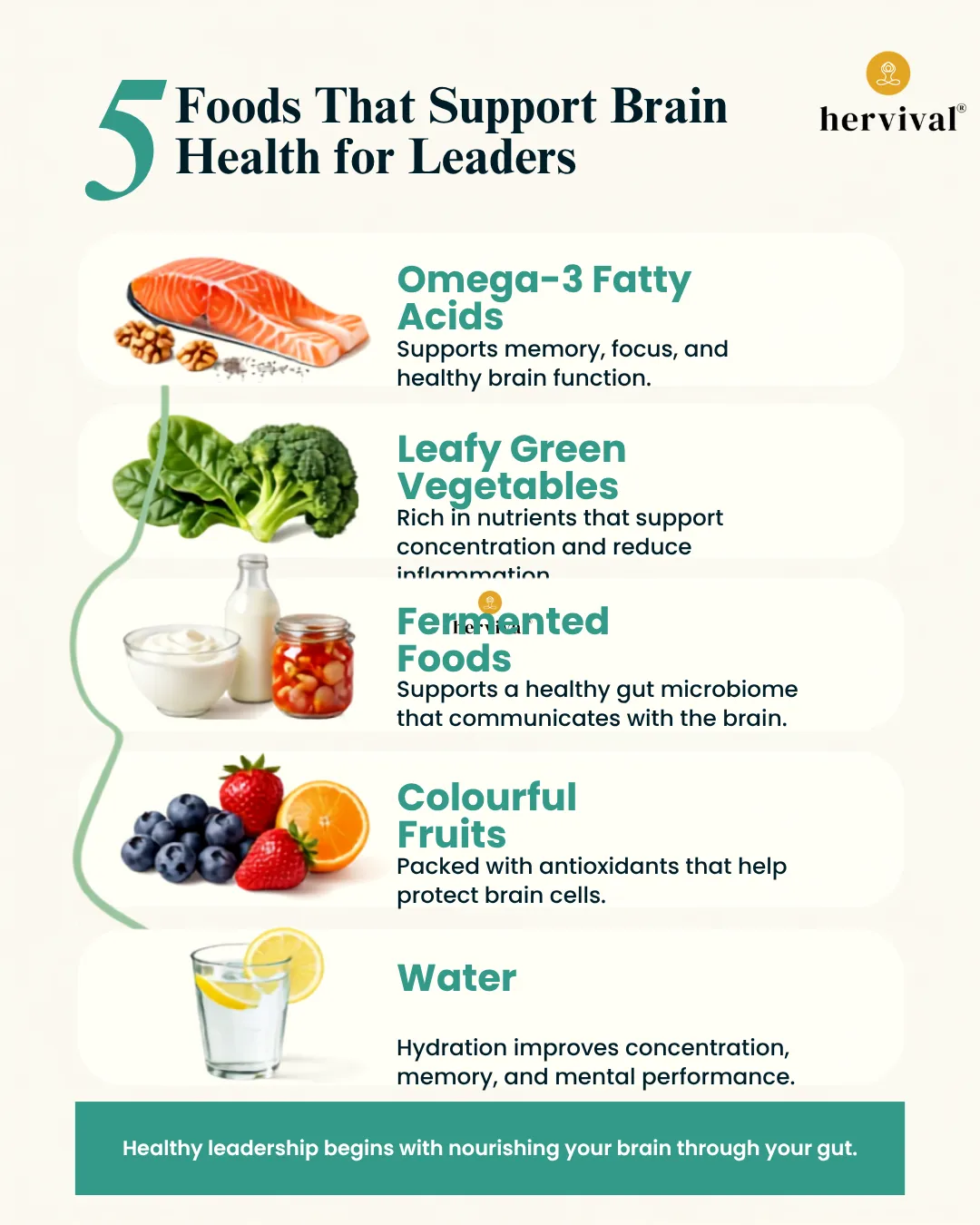
Supporting brain health for professionals does not require complicated diets.
Simple, nutrient-rich foods can have a meaningful impact.
Omega-3 Fatty Acids
Found in:
Salmon
Sardines
Walnuts
Chia seeds
Flaxseeds
These healthy fats support memory, concentration, and cognitive performance.
Leafy Green Vegetables
Spinach, kale, and other greens provide nutrients linked to improved brain function and reduced inflammation.
Fermented Foods
Foods such as:
Yogurt
Kefir
Kimchi
Sauerkraut
help support a healthy gut microbiome.
Colourful Fruits
Berries, oranges, and other antioxidant-rich fruits help protect brain cells from oxidative stress.
Water
Even mild dehydration can reduce concentration and mental performance.
Hydration remains one of the simplest leadership habits available.
Digestive Health and Focus Go Hand in Hand
Many leaders separate physical health from workplace performance.
In reality, digestive health and focus are closely connected.
Common habits that negatively affect gut health include:
Skipping meals
Excess processed foods
High sugar intake
Chronic stress
Poor sleep
Excessive caffeine
Over time, these habits may contribute to digestive discomfort, inconsistent energy, and reduced mental clarity.
This connects naturally with our article Poor Sleep and Leadership: How Rest Impacts Decision-Making, where we explore how recovery, including quality sleep, supports better cognitive performance.
Healthy Leadership Habits Begin Outside the Boardroom
Leadership development is often associated with communication, strategy, and management skills.
Yet some of the most powerful healthy leadership habits begin before the workday starts.
Consider incorporating these simple practices:
Eat Before Your First Meeting
Fuel your brain before asking it to perform.
Stay Hydrated Throughout the Day
Keep a reusable water bottle nearby and drink consistently.
Take Screen-Free Lunch Breaks
Allow your digestive system and your mind to slow down while eating.
Include More Whole Foods
Aim to fill your meals with vegetables, lean proteins, whole grains, and healthy fats.
Support Your Gut Daily
Incorporate probiotic and prebiotic foods regularly to nourish your microbiome.
Small habits create sustainable improvements over time.
Leadership Wellness Is Built From the Inside Out
Modern leadership is increasingly recognizing that wellbeing is a performance strategy.
Your ability to communicate clearly, solve problems creatively, and lead confidently is influenced not only by your experience but also by your physical health.
Similarly, Women, Nutrition, and Brain Health for Resilient Leadership explores how nutrition supports cognitive performance and emotional resilience, particularly for women balancing multiple leadership roles.
Together, these insights remind us that leadership is strengthened when the brain and body are equally supported.
Practical Daily Checklist for Better Gut Health
Try incorporating one or two of these habits each week:
Eat balanced meals instead of skipping breakfast.
Include fermented foods several times each week.
Drink more water throughout the day.
Reduce ultra-processed snacks.
Walk for 10–15 minutes after lunch.
Prioritize sleep to support both gut and brain health.
Manage stress through mindfulness or deep breathing.
Small improvements today create stronger leadership tomorrow.
Reflection
Great leadership begins long before the first meeting of the day.
It begins with how you care for your body.
Gut Health for Leaders reminds us that nutrition is not simply about preventing illness; it is about creating the biological foundation for clear thinking, emotional resilience, sustained energy, and thoughtful decision-making.
The strongest leaders understand that feeding their brains starts with nourishing their gut.
Because when your body functions well, your leadership does too.
Stay Connected With Hervival
If this reflection resonated with you, subscribe to the Hervival Newsletter for practical wellness insights, leadership resources, and science-backed strategies that help you thrive in work and life.
Every edition shares actionable guidance on nutrition, emotional wellbeing, sustainable leadership, and healthy habits, because at Hervival, we believe caring for yourself is one of the smartest leadership decisions you can make.
Research & References
Gómez-Pinilla, F. (2008). Brain Foods: The Effects of Nutrients on Brain Function. Nature Reviews Neuroscience.
Cryan, J. F., & Dinan, T. G. (2012). Mind-Altering Microorganisms: The Impact of the Gut Microbiota on Brain and Behaviour. Nature Reviews Neuroscience.
Davidson, R. J., & McEwen, B. S. (2012). Social Influences on Neuroplasticity and Wellbeing.
World Health Organization. Mental Health at Work.
Harvard Medical School. The Gut-Brain Connection: How Gut Health Affects Mental Health.


