
Minority Health and Equity: Closing the Care Gap Today
Minority health and equity are not just public health topics; they are lived experiences for millions of people across the United States. And for many, these experiences quietly shape how they access care, how they are treated, and ultimately, how healthy they are able to be.
This National Minority Health Month, we are reminded that health outcomes are not equal for everyone. While some communities have consistent access to quality care, others continue to face barriers that make even basic healthcare feel out of reach.
For leaders, professionals, and changemakers, this is not just a system issue; it is a human one.
Why Minority Health and Equity Matter More Than Ever
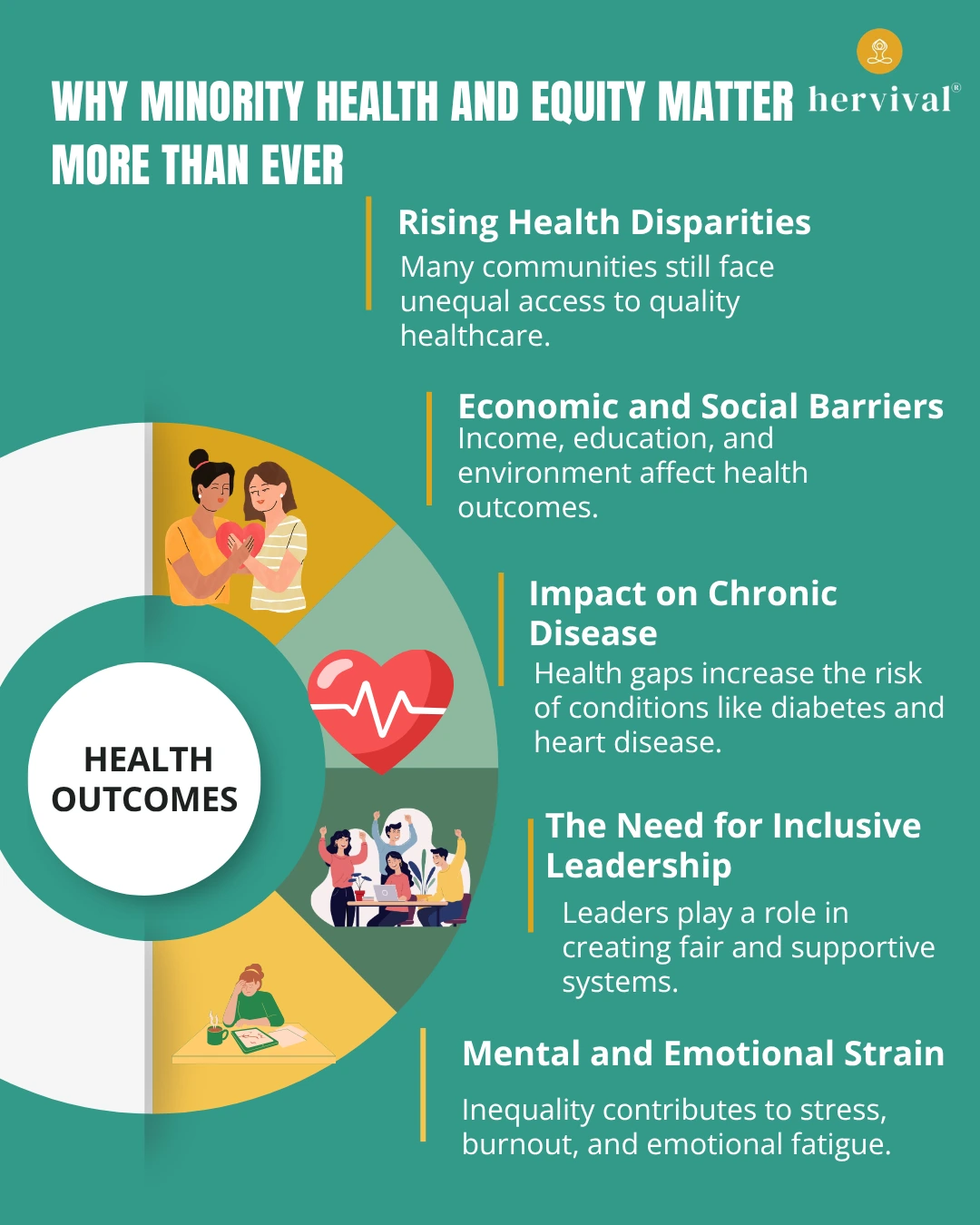
Understanding minority health and equity involves recognizing that health is influenced by factors beyond individual choices. It is shaped by access, environment, income, education, and even bias within healthcare systems.
According to the Centers for Disease Control and Prevention (CDC):
Racial and ethnic minority groups in the U.S. are more likely to experience chronic conditions such as diabetes, hypertension, and heart disease
Many communities face reduced access to preventive care and early diagnosis
Social and economic factors significantly impact long-term health outcomes
These disparities do not happen randomly. They are the result of systems that have not always been designed with equity in mind.
How Healthcare Disparities Show Up in Minority Health and Equity
For many people, the reality of minority health and equity is not abstract it shows up in everyday life.
It looks like:
Delaying doctor visits because of cost or lack of insurance
Feeling unheard or dismissed during medical appointments
Limited access to healthy food options in certain neighborhoods
Higher stress levels due to financial and social pressures
Fewer wellness resources are available in underserved communities
Over time, these experiences accumulate, affecting both physical and mental health.
And for professionals balancing careers, family responsibilities, and personal growth, these challenges can feel even heavier.
These experiences often take a toll not just physically, but emotionally. In Minority Mental Health: Healing, Wellness, and Self-Care, we explore how culturally aware self-care and mental health support can help individuals navigate these challenges with greater resilience.
The Role of Leaders in Advancing Minority Health and Equity
Leadership today is not only about performance but also about responsibility.
Minority health and equity require leaders who are willing to:
Advocate for inclusive policies
Support workplace wellness initiatives
Create environments where people feel seen and heard
Invest in resources that promote equitable access to care
Whether in corporate spaces, community organizations, or small businesses, leaders have the power to influence systems and culture.
And often, change begins with awareness.
Practical Ways to Support Minority Health and Equity
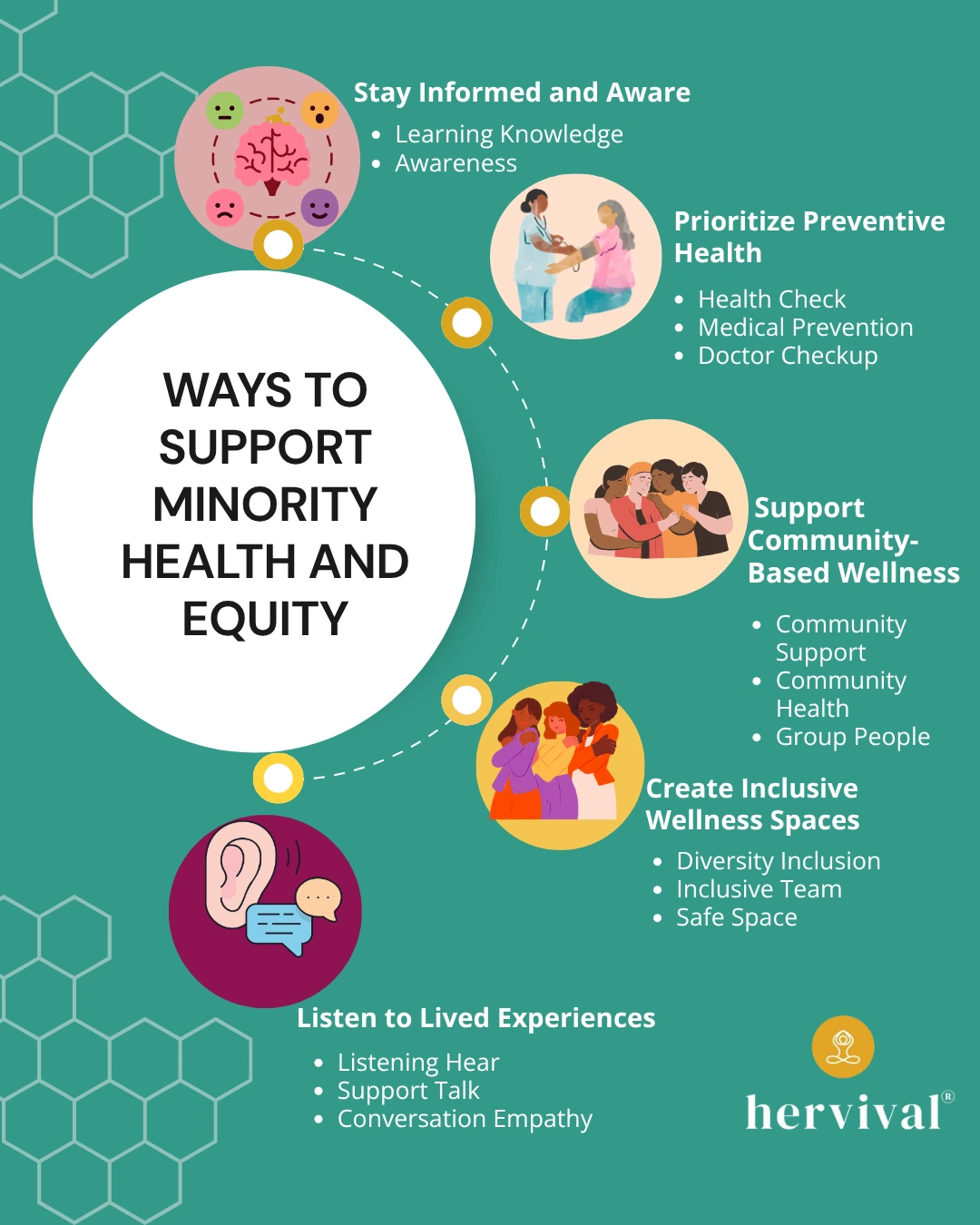
While systemic change takes time, there are meaningful steps individuals and leaders can take today to support minority health and equity.
1. Stay Informed and Aware
Understanding disparities is the first step toward addressing them. Awareness helps shift perspectives and encourages more inclusive decision-making.
2. Prioritize Preventive Health
Encourage regular check-ups, screenings, and early interventions, especially in communities where access has historically been limited.
3. Support Community-Based Wellness
Local programs, community clinics, and grassroots initiatives often play a critical role in bridging healthcare gaps.
4. Create Inclusive Wellness Spaces
In workplaces and leadership environments, ensure that wellness programs are accessible, culturally aware, and inclusive.
5. Listen to Lived Experiences
Real change happens when people feel heard. Listening to diverse perspectives helps leaders make more informed and compassionate decisions.
Physical health is also a key part of long-term wellbeing. In Strength Training for Women: A Key to Health and Longevity, we highlight how simple, consistent movement can support stronger bodies and more resilient health outcomes over time.
A More Inclusive Vision of Health and Leadership
At its core, the challenge of minority health and equity calls on us to rethink what true wellness looks like.
It is not just about individual health habits.
It is about creating systems that give everyone the opportunity to thrive.
For the next generation of leaders, this means building a future where:
Healthcare is accessible
Wellness is inclusive
Support is equitable
Final Reflection
Closing the gap in minority health and equity is not a one-time effort it is an ongoing commitment.
It requires awareness, empathy, and action.
And while the challenges are real, so is the opportunity to create change one decision, one conversation, and one community at a time.
If this reflection resonated with you, you’re warmly invited to subscribe to the Hervival Newsletter.
Inside, we share:
Thoughtful insights on wellness and leadership
Resources for personal and professional growth
Conversations that center care, equity, and sustainable success
Join a community committed to growing with purpose, clarity, and compassion.
References
Centers for Disease Control and Prevention. (2023). Health disparities and inequalities report.
World Health Organization. (2022). Health equity and its determinants.
Artiga, S., & Hinton, E. (2019). Beyond health care: The role of social determinants in promoting health and health equity. Kaiser


