
Emotional Regulation in Leadership for Better Decisions
Emotional Regulation in Leadership is often the quiet difference between reactive decision-making and thoughtful, grounded leadership. In fast-paced professional environments, leaders are expected to remain calm, clear, and composed even under pressure. Yet many leaders are never taught how to regulate their emotions, only how to suppress them.
Over time, suppression can lead to fatigue, tension, and disconnection. Regulation, on the other hand, creates clarity. And clarity is what allows leaders to make decisions that are not only effective but also sustainable.
Why Emotional Regulation in Leadership Matters for Decision-Making
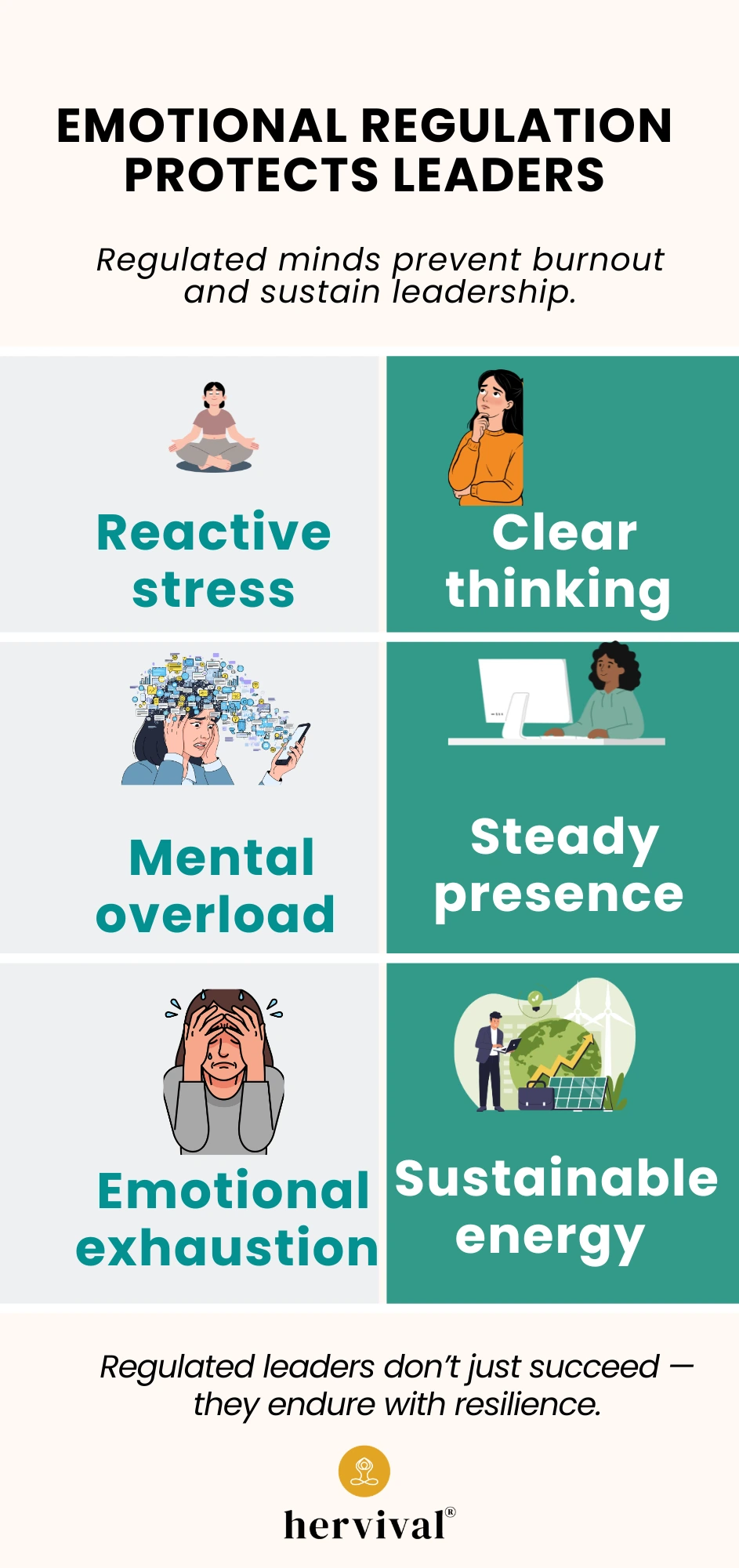
Emotional Regulation in Leadership directly shapes how decisions are made under stress. Neuroscience research shows that heightened emotional reactivity can limit activity in the prefrontal cortex the part of the brain responsible for reasoning, planning, and judgment. When leaders are overwhelmed, decision quality often declines.
Conversely, regulated emotional states support clearer thinking, improved problem-solving, and more balanced responses. This is why calm leadership is not simply a personality trait; it is a neurological advantage.
This insight connects naturally with Balanced Leadership: Work, Wellbeing, and Purpose, where internal steadiness is shown to strengthen external leadership impact.
Emotional Regulation in Leadership Is Not Emotional Silence
Emotional Regulation in Leadership does not mean ignoring feelings or pretending stress does not exist. Instead, it means recognizing emotions, understanding their signals, and responding intentionally rather than impulsively.
Healthy regulation may include:
Pausing before responding in high-pressure moments
Naming emotions instead of suppressing them
Creating space for reflection before major decisions
Using grounding practices to restore calm
These practices echo themes in Healthy Leadership Habits for Sustainable Success in 2026, where self-awareness and intentional routines are positioned as leadership strengths rather than weaknesses.
How Emotional Regulation Protects Leaders From Burnout
Emotional Regulation in Leadership also plays a protective role against burnout. Chronic emotional strain activates prolonged stress responses in the body, affecting sleep, immunity, and cognitive clarity. Without regulation, leaders may remain in a constant state of survival.
Supportive practices such as reflection, journaling, and mindful pauses help interrupt this cycle. In Journaling for Self-Discovery: Prompts to Know Yourself, reflection is described as a pathway back to clarity, something many leaders lose when constant pressure sets in.
Regulation restores energy that suppression quietly drains.
Support Systems Strengthen Emotional Regulation in Leadership
Emotional Regulation in Leadership becomes easier in environments where leaders feel supported rather than isolated. Emotional safety, trusted conversations, and community connection all contribute to healthier nervous-system responses.
Research highlighted in Harvard Business Review shows that leaders with strong social support demonstrate greater resilience, improved well-being, and better long-term performance. Calm is rarely created alone. It is often supported.
Practicing Emotional Regulation in Everyday Leadership
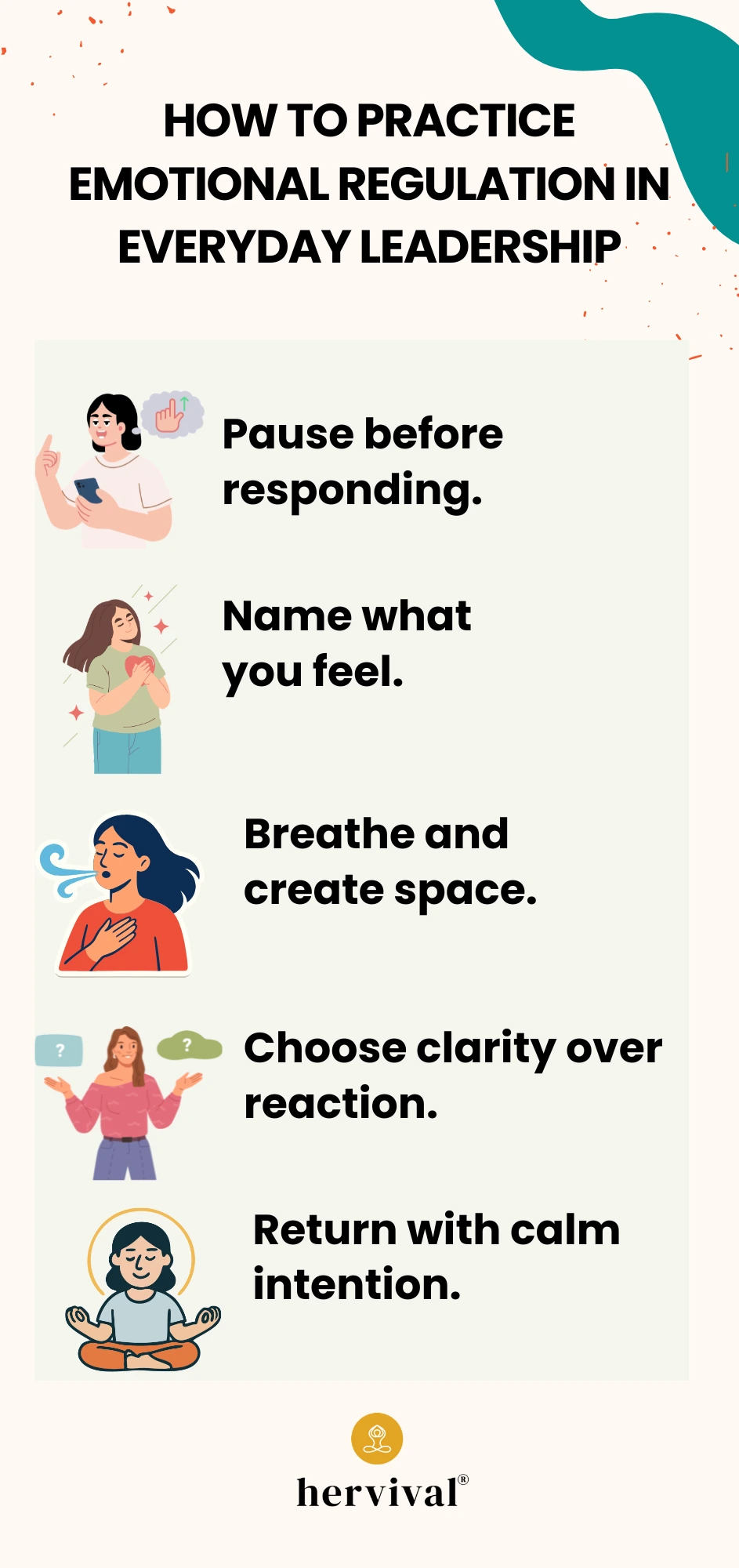
In daily professional life, Emotional Regulation in Leadership may look simple yet powerful:
Taking intentional pauses between meetings
Breathing slowly before responding to conflict
Setting boundaries that protect mental clarity
Choosing reflection instead of immediate reaction
These small practices gradually shape a leadership presence that feels steady, trustworthy, and clear.
Calm Minds Create Clearer Futures
At its core, Emotional Regulation in Leadership is about leading from steadiness rather than survival. When leaders cultivate calm awareness, their decisions become wiser, their presence becomes safer, and their leadership becomes more sustainable.
Clear thinking begins with a regulated mind. And regulated leadership creates environments where others can think, grow, and lead well, too.
If you’re ready for steady growth without exhaustion, subscribe to Hervival newsletter for practical, soul-centred support.
Research & References
American Psychological Association. (2023). Stress in America™ 2023: A nation recovering from collective trauma. https://www.apa.org
Davidson, R. J., & McEwen, B. S. (2012). Social influences on neuroplasticity: Stress and interventions to promote well-being. Nature Neuroscience, 15(5), 689–695.
Harvard Business Review. (2021). How burnout affects performance and wellbeing. https://hbr.org
World Health Organization. (2022). Mental health at work. https://www.who.int


