
Causes of Stress and Practical Ways to Manage It
Causes of stress are becoming a growing concern for millions of people globally, especially among young professionals navigating careers, relationships, and personal growth. During this Stress Awareness Month in April, the conversation around mental wellness becomes even more important.
For many people in their 20s and early 30s, life moves fast. Deadlines, social expectations, financial responsibilities, and constant digital connectivity can create pressure that quietly builds over time. What begins as occasional stress can slowly affect sleep, mood, and even physical health.
According to the American Institute of Stress, about 77% of Americans regularly experience physical symptoms caused by stress, while chronic stress contributes to conditions such as heart disease, anxiety disorders, and weakened immunity.
Understanding the causes of stress is the first step toward building a healthier and more balanced life.
Why Understanding the Causes of Stress Matters
Recognizing the causes of stress helps people identify what is truly affecting their well-being. Stress often shows up in ways people do not immediately recognize.
For example:
A young professional skipping meals due to work pressure
Someone staying up late scrolling on their phone because their mind won’t slow down
A person becomes easily irritated in conversations without realizing fatigue is the cause
Stress doesn’t only affect the mind. It also influences how people eat, sleep, and connect with others.
Research from the American Psychological Association shows that prolonged stress can increase the risk of chronic diseases such as hypertension, depression, and cardiovascular illness.
This is why stress management is no longer optional. It is essential for long-term well-being.
Common Causes of Stress in Modern Life
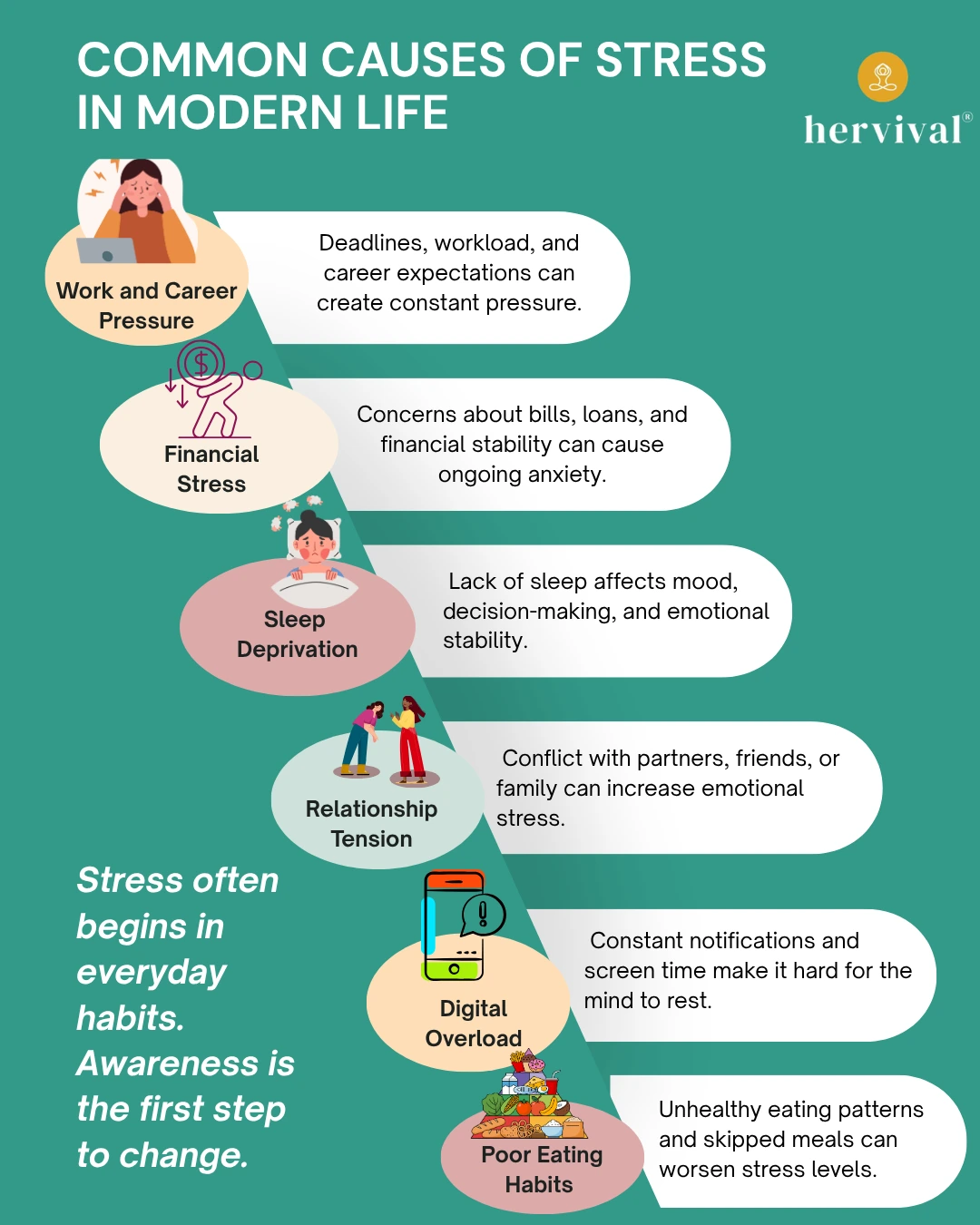
Many of the causes of stress people experience today are tied to everyday life.
Work and Career Pressure
Young professionals often feel pressure to succeed quickly. Long working hours, performance expectations, and job insecurity can create constant mental strain.
Financial Stress
Student loans, rising housing costs, and financial independence can weigh heavily on people in their twenties.
Sleep Deprivation
Many individuals sacrifice sleep to meet deadlines or stay connected online. Lack of rest reduces emotional stability and decision-making ability.
Relationship Tension
Stress often affects communication, leading to misunderstandings with partners, friends, and family.
Digital Overload
Constant notifications, social media comparisons, and online expectations can contribute to emotional exhaustion.
These daily experiences highlight why recognizing the causes of stress is so important for building healthier habits.
Practical Ways to Manage the Causes of Stress
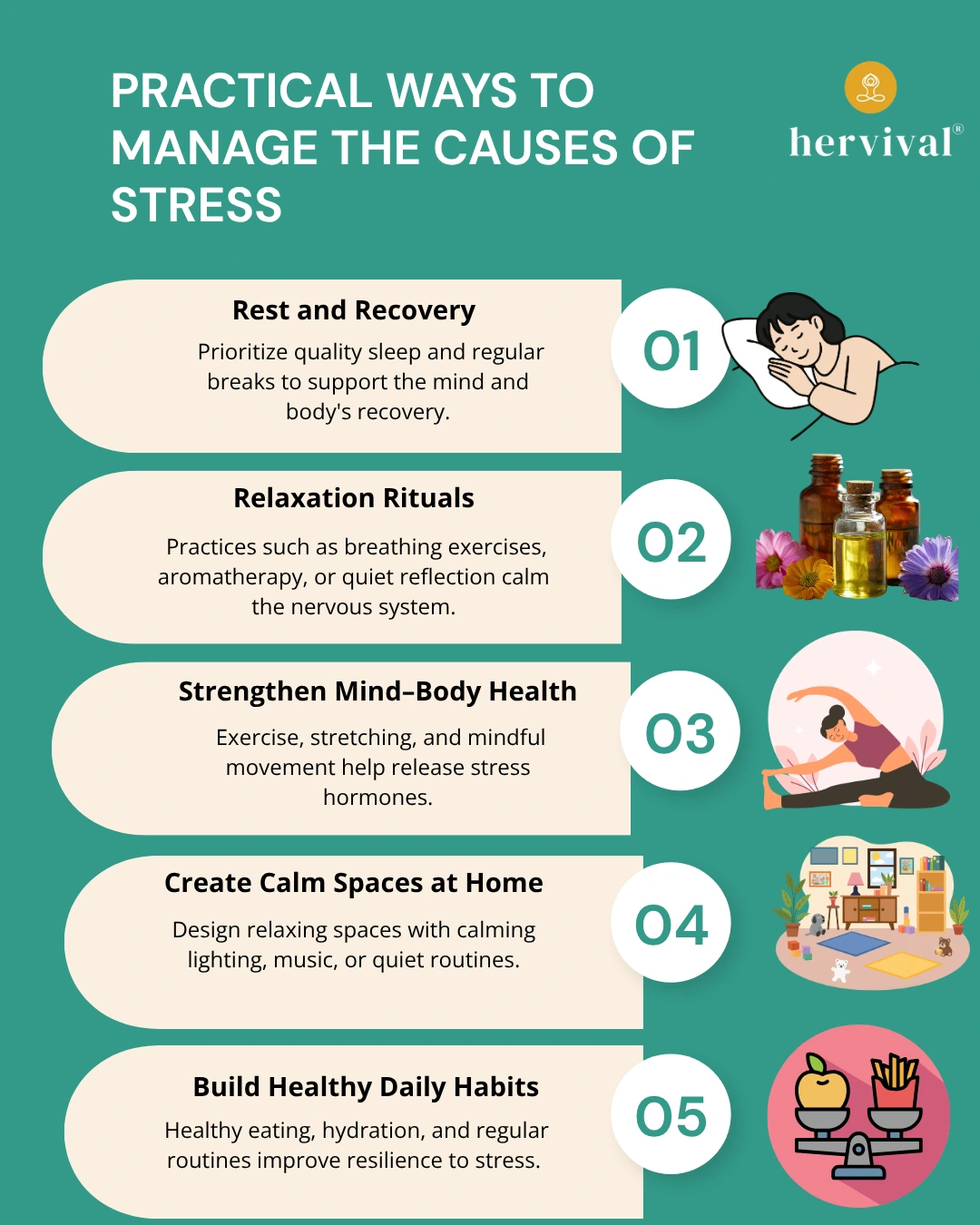
The good news is that while stress may be common, it is also manageable. Small lifestyle changes can significantly reduce the impact of stressors.
1. Prioritize Rest and Recovery
Sleep plays a critical role in emotional balance and cognitive clarity. Understanding the different forms of rest can also help people recover from daily pressure. Our article, “Seven Types of Rest: How to Restore Your Energy and Well-Being,” explores how mental, emotional, and physical rest can restore energy and focus.
2. Create Relaxation Rituals
Intentional moments of relaxation can calm the nervous system. Many people find that sensory practices, such as essential oils, help reduce tension. In “Aromatherapy for Stress Relief: Boost Your Mood Naturally,” we explore how simple scents like lavender and peppermint can support relaxation and mental clarity.
3. Strengthen Mind–Body Health
Stress not only affects the mind but also the body’s immune system. In “How Your Mind Affects Your Immune System: 10 Ways to Stay Healthy,” we discuss how emotional health directly affects physical well-being.
4. Create Calm Spaces at Home
Relaxation does not always require expensive wellness retreats. Simple practices such as warm baths, calming music, and quiet reflection can help reduce tension. Our guide, “Spa Experience at Home: Simple Rituals for Relaxation,” shares easy ways to create restorative moments in everyday life.
5. Build Healthy Daily Habits
Consistent habits help regulate stress levels. These may include:
Regular physical activity
Balanced nutrition
Mindful breathing exercises
Spending time outdoors
Talking openly with trusted friends or mentors
These practices help prevent stressors from becoming overwhelming.
A Healthier Future for the Next Generation
For many young leaders today, success is no longer defined only by productivity. Increasingly, people are prioritizing mental health, balance, and sustainable lifestyles.
Recognizing the causes of stress allows this generation to create healthier systems for themselves and their communities. Stress Awareness Month reminds us that caring for mental well-being is not a weakness; it is wisdom.
Small changes made today can lead to healthier lives tomorrow.
If this reflection resonates with you, we invite you to subscribe to the Hervival newsletter.
Our newsletter shares practical wellness insights, leadership resources, and supportive tools designed to help people succeed in their health, wellness, and personal growth journeys.
Subscribers also receive updates on new programs, resources, and initiatives from Hervival that support a healthier, more balanced life.


